Becherovka: what you need to know, history, types, how to drink + how to distinguish a fake
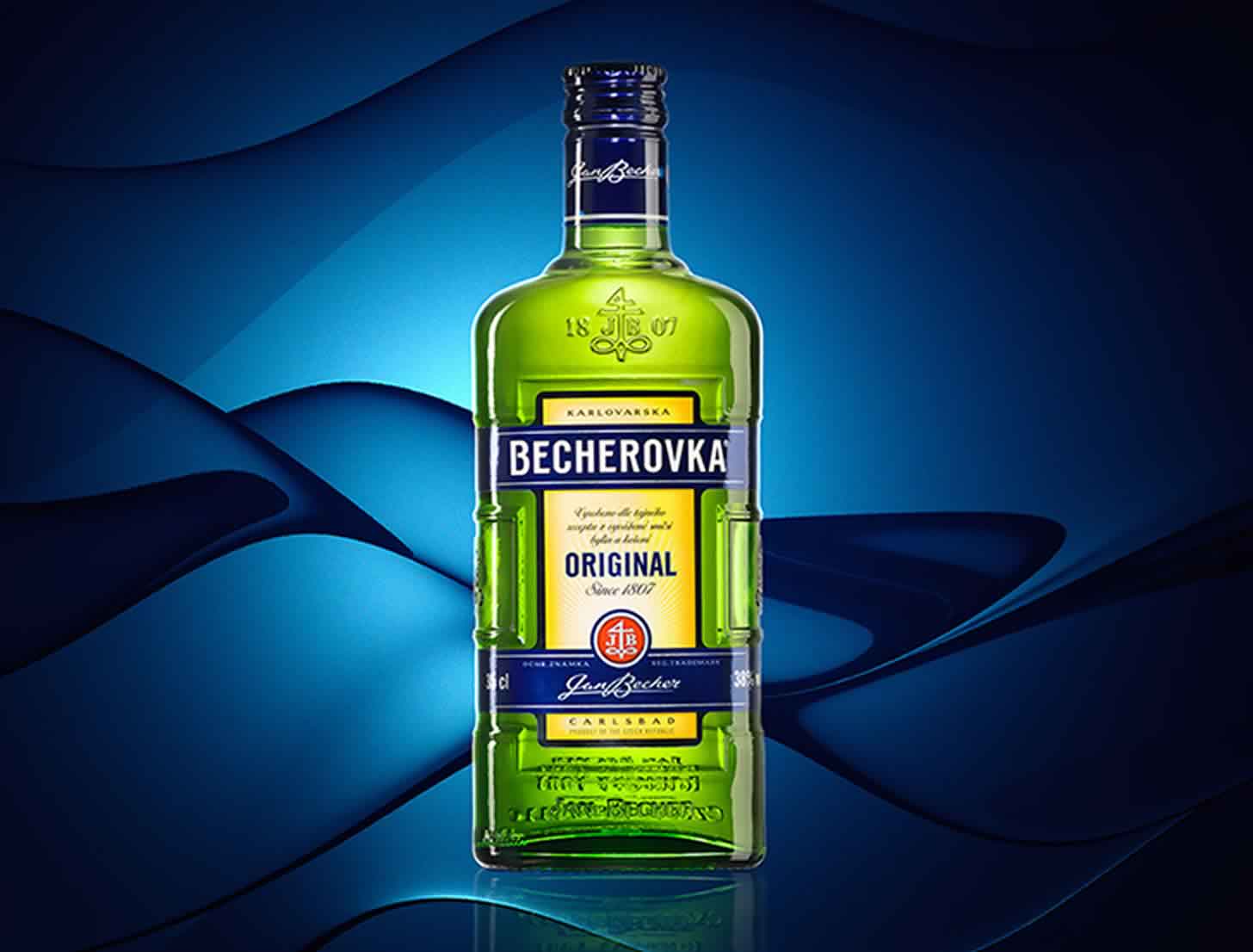
Becherovka is a traditional herbal liqueur originally from the Czech Republic. Made exclusively from natural ingredients based on the famous water from Karlovy Vary has been delighting fans around the world for over 200 years.
The drink has a unique rich flavor and aroma, filled with a bouquet of 32 types of herbs and spices, a frequent guest of many cocktails.
What you need to know about Becherovka
Becherovka really heals
It is a proven fact, however, that one should not overdo it in drinking a drink under the guise of treatment.
Becherovka tonic tastes better than gin and tonic
Vzboltai thinks so, but if you haven't tried it yet, it's time to think about it, just don't forget to add ice.
Special dishes for drinking
Few people know, but there is a special porcelain cup for drinking Becherovka.

Calorie content of Becherovka
It contains 248 kcal per 100 milliliters of drink.
How many degrees in Becherovka
From 20 to 40%, more details see below.
Everyone can visit the Becherovka Museum
The Jan Becher Museum in Karlovy Vary attracts thousands of Becherovka lovers every year.
The exhibition is located in the historic building of the factory.
During the tour, visitors will see a short film about Becherovka, the old cellars used for maturation of the liqueur, various historical objects related to the liqueur, and some production facilities. The museum also has a bar and a gift shop.

History of Becherovka
1805: Dr. Frobrig reveals the recipe for Jan Becher's unusual medicinal drink.

1807: Using Dr. Frobrig's revised recipe, Jan Becher launches the English Bitter to treat stomach ailments.
The medicine was so popular with the locals that it caused a stir in Jan's small shop.
1834: The founder's family expands the export of Becherovka, at this time the drink was sold in Szczecin, and a year later - in Vienna and Munich, and in 1838 the liquor appeared in Paris.
1866: A classic bottle design was developed.
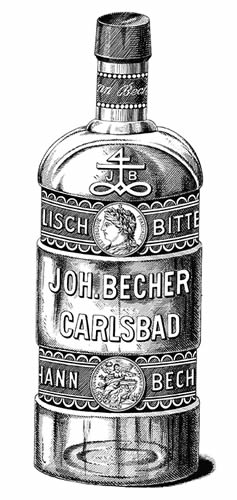
1867: Jan Becher moved to a new plant in Steinberk.
1871: Gustav Becher took over the family business (1840-1921) and successfully ran it for several decades until he sold his share to his half-brothers Rudolf and Michael.
1900: Becherovka has gained great recognition, in addition to receiving the title of supplier of the imperial and royal courts, the drink has received honorary titles and medals at world exhibitions, including the Grand Prix in Paris
1904: As the popularity of Becherovka grew rapidly, the illegal activity of its competitors also increased. The fight against plagiarism began in 1904, when Jan Rudolf Becher filed a lawsuit against those who tried to steal their ideas.
Despite the fact that they won, the battle had only just begun. Attempts to copy the labels, name, and recipe of the liqueur continued to become more common.
Luckily for Becherovka, plagiarism can be prevented today with modern methods of protection.
1907: Celebration of the 100th anniversary of Becherovka and the development of a unique dark green bottle color.
1910: The management of the company was taken over by two brothers, Michael and Rudolf, half-brothers of Gustav, who had been passive partners since 1889. Together they expanded the factory in Steinberk and focused on new markets.
Michael began selling bottles of Becherovka that could be taken on the road, while Rudolf focused mainly on exports.
1917: Shortly before his death, Michael Becher divided his share in the company between his son Alfred and his son-in-law Hans Klapck.
Alfred (1883-1940) modernized the company and production, built a factory in Dresden and expanded the range of Becherovka products.
However, he was wounded during World War I and died during World War II. After his death, his daughter Hedda took over the company.
1922: The names "Becherovka" of the Czech and German versions, "Becher Bitter" were registered as a trademark.
Before that, Becherovka was sold as "English Bitter", "Karlsbader Bitter", "Karlsbader Becherbitter", "Johann Becher", etc.п.
1934: After the repeal of Prohibition, Becherovka conquered the United States.
1938: The start of Becherovka sales in England.
1941: A woman at the head of the company.
Hedda Becher (1914-2007) was the only woman and the last member of the Becher family to know the cherished secret recipe for Becherovka.

Before taking up her post at the end of the war, she was forced to reveal a secret family recipe by order of the communist regime: the original recipe handwritten by Frobrig himself.
Despite this, Hedda began to develop an "identical" liqueur in West Germany. The result is a product that, according to experts, is completely identical to the original recipe created in Karlovy Vary.
1972: Hedda Becher sells the company to a corporation called Underberg, with whom she agreed to distribute Becherovka from Karlovy Vary on the Western European market.
This was when the blue and red export labels appeared. Despite rumors, the liqueur was identical in all bottles.
2001: After the war, when the Becher family was evicted and the company was nationalized, the state owned it for 57 years. Privatization of the company began in 1997, but was successfully completed only in 2001.
The current owner of the company (almost 100% of shares) is the French company Pernod Ricard.
2003: Along with some marketing changes, the appearance of the brand was changed. The English designer Martin Blunt, who was responsible for the changes, carefully developed a new look at key moments in the brand's history.
Martin Blunt has added soul to the historic design: a classic blue and yellow combination on the original green glass, but with a new silver element and a symbolic red seal: the signature of Jan Becher.
2010: New brewery in the Karlovy Vary region in Bochatec.
2019 - today: Becherovka has been exported to more than 40 countries, including the USA.
Types of Becherovka
Becherovka Original
The liquor has a sunny, golden, clear color.
The taste of the drink is rich, sweet and at the same time bitter and tart.
It has a rich herbal aroma.
Strength: 38%
Becherovka Lemond
Light straw-colored liqueur with light golden reflections.
It has a refreshing, light, clean taste with bright citrus hints, which are set off by notes of various herbs and menthol.
The aroma is fresh, elegant, with characteristic lemon tones, which are harmoniously complemented by herbal and menthol nuances.
Alcohol content: 20%
Becherovka Cordial
A dark caramel-colored liqueur created on the basis of white wine and linden blossom extract.
It has an invigorating, tart taste, filled with herbal and floral hints.
The drink has a bright aroma with hints of herbs and subtle nuances of linden blossom.
Strength: 35%
Becherovka KV 14
A strong liqueur of a rich burgundy-red color, created on the basis of red wine.
It has a warming, tart taste and bright aroma with hints of herbs, flowers and fruits.
Strength: 40%


How to drink Becherovka
Becherovka in its purest form
Since Becherovka was conceived as a self-sufficient liqueur digestif, then it is better to use it in its pure form after a hearty meal or for the upcoming sleep.
The drink is served in small glasses, chilled to a temperature of 5-7°C. This method of serving somewhat weakens the aroma of the liqueur, but refines its taste.
The only acceptable snack in this case is a slice of orange lightly sprinkled with cinnamon.
Becherovka in tea and coffee
For medicinal purposes only, a couple of tablespoons of classic Becherovka can be added to tea or coffee. The taste of the liqueur may be almost imperceptible, but you will be assured of vigor, increased resistance to colds and excellent digestion.
Becherovka with beer
The closest neighbors of the Czechs, the Slovaks, invented their own method of drinking Becherovka.
40-50 ml of chilled drink are drunk in one gulp, after which a mug of light beer is used.
The addition of hops and malt to the herbal base of the liqueur creates an incomparable flavor effect, but is associated with quite strong intoxication.
Becherovka in cocktails
Traditional liqueur goes well with some juices. First of all, we are talking about currant, apple and cherry flavors.
As for KV 14, orange juice is a good match for it.
Everything cocktail recipes here.
How to distinguish a fake Becherovka
The recommendations below apply only to the original version of the drink, new products may not contain some elements.
On the front side of the original bottle of Becherovka, above the label, there is an embossed logo and the year of creation of the drink - 1807.
Under the label there should be a relief engraving of the name of the creator of this liqueur - "Jan Becher"
On the back of a genuine bottle of Becherovka, under the counter-label, there are embossed inscriptions "Jan Becher", "Karlovy Vary", "Czech Republic".
In addition, there are rectangular embossed lines all over the bottle, which give the bottle a special pattern.
The lid of a genuine liqueur is blue with a red company logo on top.
The neck of the bottle is covered with a blue "shirt", which also has an image of the logo, as well as the name of the creator - "Jan Becher"
The label of the original Becherovka, as well as its counter-label, have a non-traditional shape: the upper and lower stripes encircle the entire bottle and are embossed in special relief recesses.
An excise stamp is required, with the exception of liquor purchased at a Duty Free store.


Update: 20.05.2019
Category: Liqueurs and Tinctures