Rum: what you need to know, history, classification + how to drink and choose

Rum is a distilled alcoholic beverage derived from sugar cane by-products such as molasses, or directly from sugar cane juice through a fermentation and distillation process.
Real rum is usually aged in oak barrels.
Everything you need to know about rum
Most of the world's rum production takes place in the Caribbean and Latin America.
This alcoholic beverage is also produced in Australia, Portugal, Austria, Canada, Fiji, India, Japan, Mauritius, Nepal, New Zealand, the Philippines, Reunion Island, South Africa, Spain, Sweden, Taiwan, Thailand, the United Kingdom, and the United States.
At the same time, almost every country has its own peculiarities and traditions related to the production and classification of rum.
Rum has well-known associations with the Royal Navy (where it was mixed with water or beer to make grog) and piracy (where it was consumed as a boombo).
Alcohol has also served as a popular means of economic exchange, used to finance ventures such as slavery, organized crime, and military rebellions (e.g., the American Revolution and the Rum Rebellion in Australia).
The strength of rum
It can range from 35 (rum elixirs) to 75+ degrees (so-called strong rum, for example, Bacardi 151).
Diverse flavor range of the drink
There are variants that have almost no taste, varieties with the taste of molasses and caramel, enriched with various spices, and varieties flavored with essences of tropical and citrus fruits or coconut milk.
Fermentation
To start fermentation, yeast and water are added to the main ingredient. While some rum producers rely on natural yeast, many use special types of yeast to obtain a certain flavor and predictable fermentation time.
The use of slower yeasts leads to the collection of more esters during fermentation, which is reflected in the richer taste of rum.
Distillation
There is no single standard method of distillation for rum.
While some producers produce rum in batches using conventional stills, most producers use vertical distillation.
The output from the stills contains more additives and impurities than in vertical distillation, so it has a richer flavor.
Aging rum in tropical climates
Unlike whiskey, rum is not aged for long, due to the climate: a barrel can lose 40 to 45 percent of its alcohol in 10 years of aging. That is why aged tropical rum spends a maximum of 3-5 years in a barrel, while North American rum can be aged for up to 10 years or more.
It should be understood that the hot climate contributes to faster aging of the drink. In warehouses where the air temperature is below +30 degrees, two years of aging is equal to six to eight years in a warehouse in Scotland.
The rum is aged in oak barrels, which provide the drink with a beautiful color, as well as a rich taste and aroma.
Spanish rum
The word "ron" is used for rums from Spanish-speaking countries.
Ron añejo ("old rum") refers to rum that has aged significantly and is often used for premium products.
French-speaking islands
Most famous for its agricultural rum ("rhum agricole"). This rum, made exclusively from cane juice, preserves the original cane flavor better than others.
Typical representatives of this style are rums from Martinique and Guadeloupe.
Other names of rum
Nelson's blood, devil killer, demon water, pirate drink, sea tidies and Barbados water.
A version of rum from Newfoundland is referred to as "heather", while some low-quality West Indies rums are called taffy.
History of rum
The first mention of rum appears in the ancient text Vagbhata, where an Indian Ayurvedic physician (7th century AD) wrote about the. е.).э.) advised a person to drink unsurpassed rum with juice.
In the 14th century, the famous Italian merchant and traveler Marco Polo made a record of a "very good wine made of sugar" that was offered to him in the area that became modern Iran.
The first distillation of rum in the Caribbean took place on sugar cane plantations in the 17th century. Plantation slaves discovered that molasses - a by-product of the sugar refining process - can be fermented into alcohol.
Later, the distillation process was improved: this is how the first ancestor of modern rum appeared.
It is believed that the canonical taste of rum first appeared on the island of Barbados.
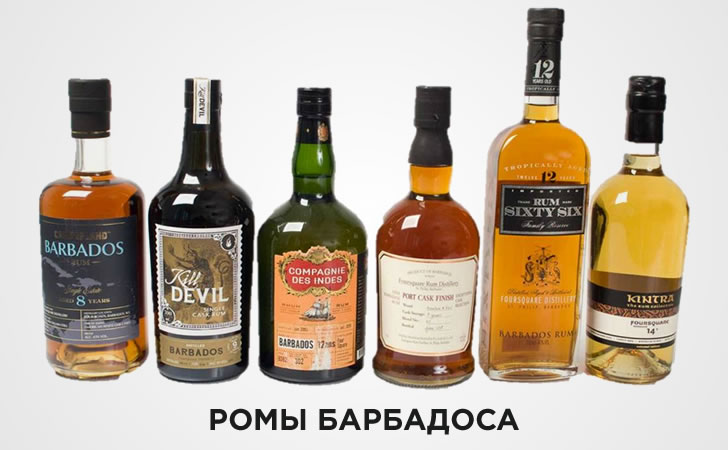
In 1620, rum production was also registered in Brazil.
After the development of rum in the Caribbean, the drink's popularity spread to colonial North America. To meet the demand for the drink, the first rum distillery was built on Staten Island in 1664.
Rum production became the largest and most prosperous industry in early colonial New England.
New England became a center of distillation due to technical skills as well as an abundance of lumber; the rum produced there was lighter, more like whiskey.
According to estimates of rum consumption in the American colonies before the Revolution, each man, woman, or child drank an average of 3 imperial gallons (11 liters) of rum per year.
To meet the demand for molasses for rum production, along with the growing demand for sugar in Europe in the 17th and 18th centuries, a source of labor was needed to work the sugar plantations in the Caribbean. The triangular trade in rum, molasses, and slaves between Africa, the Caribbean, and the colonies was born.
It is believed that a slave from Africa could be bought for four gallons (15 liters) of rum and a piece of of calico.

The popularity of rum continued to grow even after the American Revolution.
Restrictions on sugar imports from the British Caribbean islands, combined with the development of American whiskey, contributed to the decline in the popularity of rum in North America.
The association of rum with piracy began after the British capers merchant ships were attacked, and since some privateers drank only rum, the drink gained a bad reputation. The connection with piracy was only strengthened by literary works, such as Robert Louis Stevenson's Treasure Island.
In 1655, the British fleet captured the island of Jamaica. Due to the availability of large stocks of rum in the country, the British changed the daily ration of alcohol given to sailors from French brandy to rum, thereby tightly hooking the entire fleet on a new cheap drink. The strength of rum at that time ranged from 47 to 57%.
To minimize the effects of alcohol on his sailors, Admiral Edward Vernon mixed rum with other ingredients, which became known as grog.
The legend of the sea rum and Horatio Nelson says that after the victory and death at the Battle of Trafalgar, Nelson's body was preserved in a barrel of rum so that it could be returned to England.

However, upon arrival, the barrel was opened and found to contain no rum. Nelson's body was removed and upon examination it was found that the sailors had drilled a hole in the bottom of the barrel and drank all the alcohol, hence the term "Nelson's blood" is used for the rum. It also serves as the basis for the term "tapping the admiral" used to describe secretly sucking liquor from a barrel through a straw.
The details of the story are disputed, as many historians claim the barrel contained French brandy.
The official record states that the body was placed in "purified spirits".
Rum was directly involved in the only military takeover of the Australian government, known as the "Rum Rebellion". When William Bly became governor of the colony, he attempted to remedy the pressing problem of drunkenness by banning the use of rum as a medium of exchange.
In response to Bly's attempt to regulate the use of rum in 1808, the New South Wales Corps marched with bayonets to Government House and placed Bly under arrest. The rebels continued to control the colony until the arrival of Governor Lachlan Macquarie in 1810.
In the 1950s and 1960s, the Soviet Union's Glavspirt factories produced the so-called "Soviet rum" from domestic raw materials - a bitter tincture made using alcohol with a strength of at least 48% and prune juice.
In the USSR, rum alcohol was also produced from sugar cane juice grown in the republics of Central Asia. In particular, in the Altynsai district of the present-day Termez region, there was a production of rum from the reeds growing there.
Classification of rum
The varieties and variants used to describe rum depend on the place where the rum was made. Despite these differences, these terms are often used to describe different types of rum:
Dark rums
By color: brown, black or dark red.
Usually made from caramelized sugar or molasses. They are usually aged longer in heavily charred barrels, which gives them a much stronger flavor than light or golden rums; hints of spice can be detected along with a strong molasses or caramel flavor.
Dark rum is most often used in cooking. Most dark rums come from areas such as Jamaica, Haiti, and Martinique.
Flavored rum
Filled with fruit flavors such as banana, mango, orange, pineapple, coconut, carambola or lime.
As a rule, the strength of such rums is less than 40%. They are mostly used to flavor similar tropical-themed cocktails, but are also often drunk neat or on the rocks.
Flavors are added after fermentation and distillation.
-
Also called amber rums, they are aged rums of medium density.
They acquire a dark color due to aging in wooden barrels (usually charred bourbon barrels).
Golden rum has a richer flavor than light rum, and it can be safely considered something in between light and dark.
Light rum
Also referred to as silver or white rum.
In general, light rum has a very low flavor, except for the inherent sweetness of rum, and is therefore used as a base for cocktails. Light rum is sometimes filtered after aging to remove any coloration.
Most light rums come from Puerto Rico.
Strong rum
Rum, which is much stronger than the standard 40% rum. Many types of this alcohol have a strength of more than 75% up to 80%! Bright representatives: Bacardi 151 and Pitorro.
This rum is usually used in cocktails.
Premium aged rums
Rum, aged most often in sherry barrels for more than 5 years, which is usually consumed in the same way as whiskey.
Alcohol has a richer aroma and taste.
-
They get their flavors by adding spices and sometimes caramel.
Most of them are darker in color and are based on golden rum.
Some are significantly darker, while many cheaper brands are made from inexpensive white rum and darkened with caramel-colored dye.
Among the spices added are cinnamon, rosemary, anise, pepper, cloves and cardamom.
How to drink rum
Light rums are usually used in cocktails, but they can also be drunk as an aperitif in their pure form.
Golden and dark rums are usually consumed neat or with ice. Dark rum is also used for cooking various dishes (digestif).
Premium rums are intended exclusively for consumption neat or with ice (digestif).
You can drink rum chilled or at room temperature.
It is also impossible not to mention hot drinks with the addition of golden or black rum: grog, punch, coffee and chocolate, which contribute to both vigor and pleasant pastime, and the prevention of colds.

How to choose rum
What to look for in the first place
It is believed that the birthplace of rum is the Caribbean islands. That's why Vzboltai recommends trying rums from Cuba, Haiti, Jamaica, Puerto Rico and other island countries.
What it is made of
Most rums are made from molasses (which is a by-product of the sugar cane production process), but the most valuable is the rum made from fresh cane juice.
Usually the manufacturer indicates on the label what his rum is made of, in all other cases the drink is most likely made of molasses.
Decide on the desired flavor and type of feast
Shake about it wrote above.
Price and place
You won't find quality rum in a five-pack or a magnet. Look for authentic rum in boutique liquor stores in your city or in reputable online stores.
Update: 22.04.2019
Category: Rum