Radeberger beer: history, features, how and with what to drink + how to distinguish a fake
Briefly about Radeberger beer
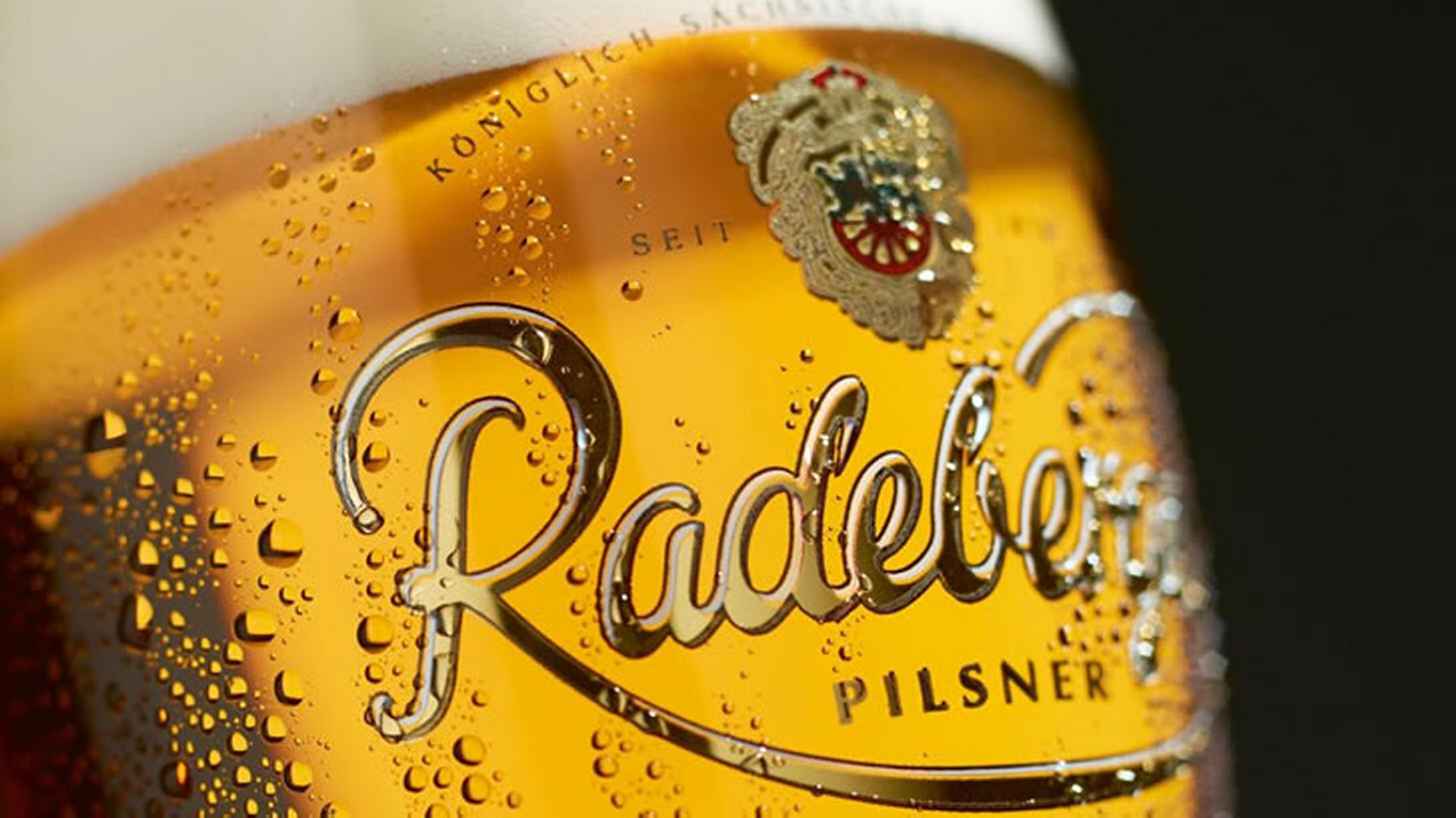
Radeberger Pilsner - German beer from the town of Raderberg near Dresden. Every year, 2,000,000 hectoliters of beer are supplied to the international market. Interestingly, there is not much choice of the drink: there has been only one flavor for 140 years, and the demand for it is still high. The slogan of the beer: "Radeberger Pilsner is always special", and you can't argue with that.
The history of Radeberger beer
In the second half of the XIX century, Saxons, representatives of the former kingdom of Saxony, lived in Germany. They liked Czech pilsner the most among beer drinks. This is a bottom-fermented lager, and it has a Bavarian counterpart. This was especially offensive to Germans because Bavaria is in a sense a separate state, and cultural nationalism is most pronounced in it.
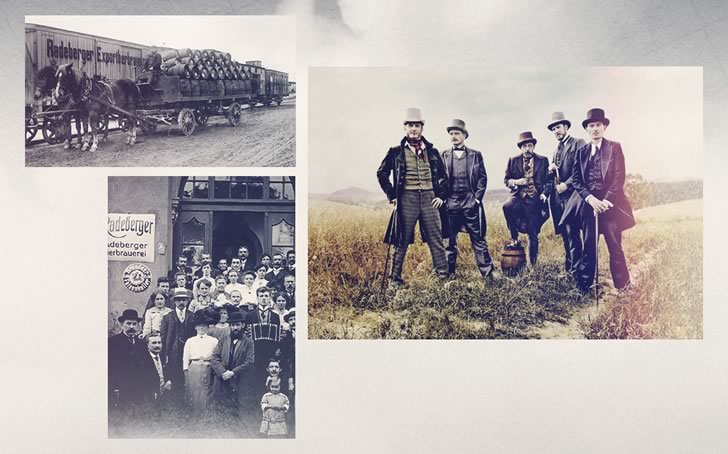
To solve the problem, the liquor store Knobloch’schen high society representatives met one day. Five friends, namely the mayor of Raderberg, a landowner, a weaving factory owner, a treasurer and a member of the Reichstag, decided to make their own Saxon product and found a company over a glass of Czech pilsner.
A landowner named Gustav Philipp was the oldest of them. He became the manager because he invested all his savings in the company.
The brewery was opened in 1872. Czech pilsner was made in the city of Pilsen, and, according to tradition, the secret of its taste was in the special water from the city's springs. Philip took this fact into account and sent his son directly to the Czech Republic to deliver 2,500 liters of water on horseback. His plan was to first learn how to make the original pilsner, and then improve its flavor and make it German.
As it turned out, there was no need to travel far. 7 kilometers from the company was the community of Karslfeld, where the same soft water could be obtained. They did not hesitate and laid a pipeline to the source. As a result, they managed to achieve such a high quality of products that they began to supply them to other countries. The company was registered in the commercial register as Radeberger Exportbierbrauerei.
In 1885, Philip died. Konrad Brun took over, and the best times of production were yet to come.
The beer did not go unnoticed by the Czechs. They filed a lawsuit and demanded that the name "pilsner" be assigned directly to the territory of Pilsen. In 1910, a court ruled that Saxon beer was not equal to Czech beer, so the name Radeberger was added to the label. So, the buyer will not confuse them.
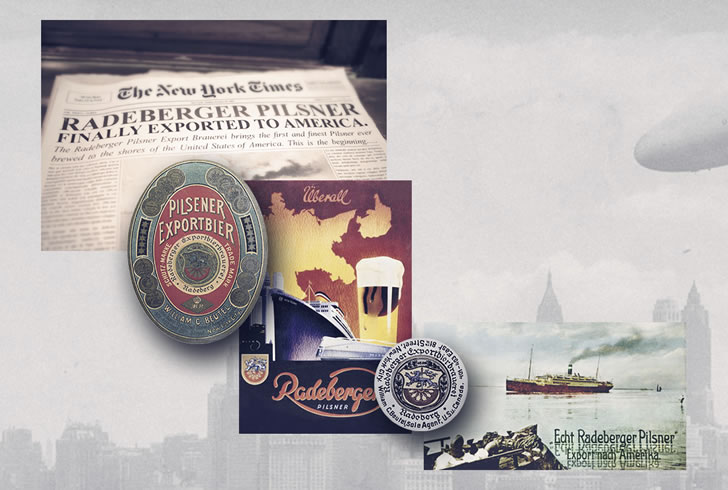
Thanks to Brun's talented leadership, in 1905 the brewery began to supply products to the royal court. The then ruler Frederick Augustus III fell in love with it. In addition, German Chancellor Otto von Bismarck was a fan of the beer, who jokingly dubbed it "the beer of the chancellors". The main reason for this love is the high quality of the products. The government-recognized brand became extremely popular. Beer began to be shipped to neighboring countries, Austria, Poland, and later to another continent - the United States.
In addition, Brun created a system of "three-malt" ovens and began to use it in the production process. Its peculiarity was that the probability of spoiling the drink was minimal. Even to utilize the leftovers, the talented manager developed his own method. And if they used to be thrown away, now they began to use them in the future.
In 1914, the First World War broke out, and by 1919 the company suspended its activities, as a significant part of its employees went to the front. After the war, Brun paid pensions to the disabled and families of fallen soldiers. The factory continued to operate under Brun's leadership until 1923. As director, Brun made such a contribution to the production and development of the brand that after his death, a secondary school was named in his honor.
After that, the company became the property of the state, as it was nationalized. It has gained the status of one of the largest producers of beer beverages in the GDR.
In 1990, the GDR and Germany united into a single state, and the company was bought by the Binding-Gruppe, located in the western part of the country, in Frankfurt am Main. The owners have renovated the brewery and established a production capacity of 13,000,000 hectoliters per year. More than 230,000,000 euros were invested in the development of the company.
In the XXI century, a new name appeared: Radeberger Gruppe. Now the sales volume is 15% of the entire German market.
The taste of Radeberger beer
The beer is light, it is a lager, which involves bottom fermentation. It has a clear bright straw color. The peculiarity of the drink is a large amount of foam. The taste is harmonious, refreshing. The flavor is dominated by sweet malt, hints of fruit and hop cones that add bitterness. There are more hops than in the average pilsner. The citrusy aftertaste is set off by smoky notes. Alcohol content 4.8%, density 10%.
How and with what to drink Radeberger beer
Pilsner is usually served in special glasses, beer mugs, regular glasses or branded glasses with an engraved name. It goes well with bread toast, fried eggs, sugar-free pastries, seafood (shellfish), and light dessert dishes.
How to distinguish a fake Radeberger Pilsner beer
-
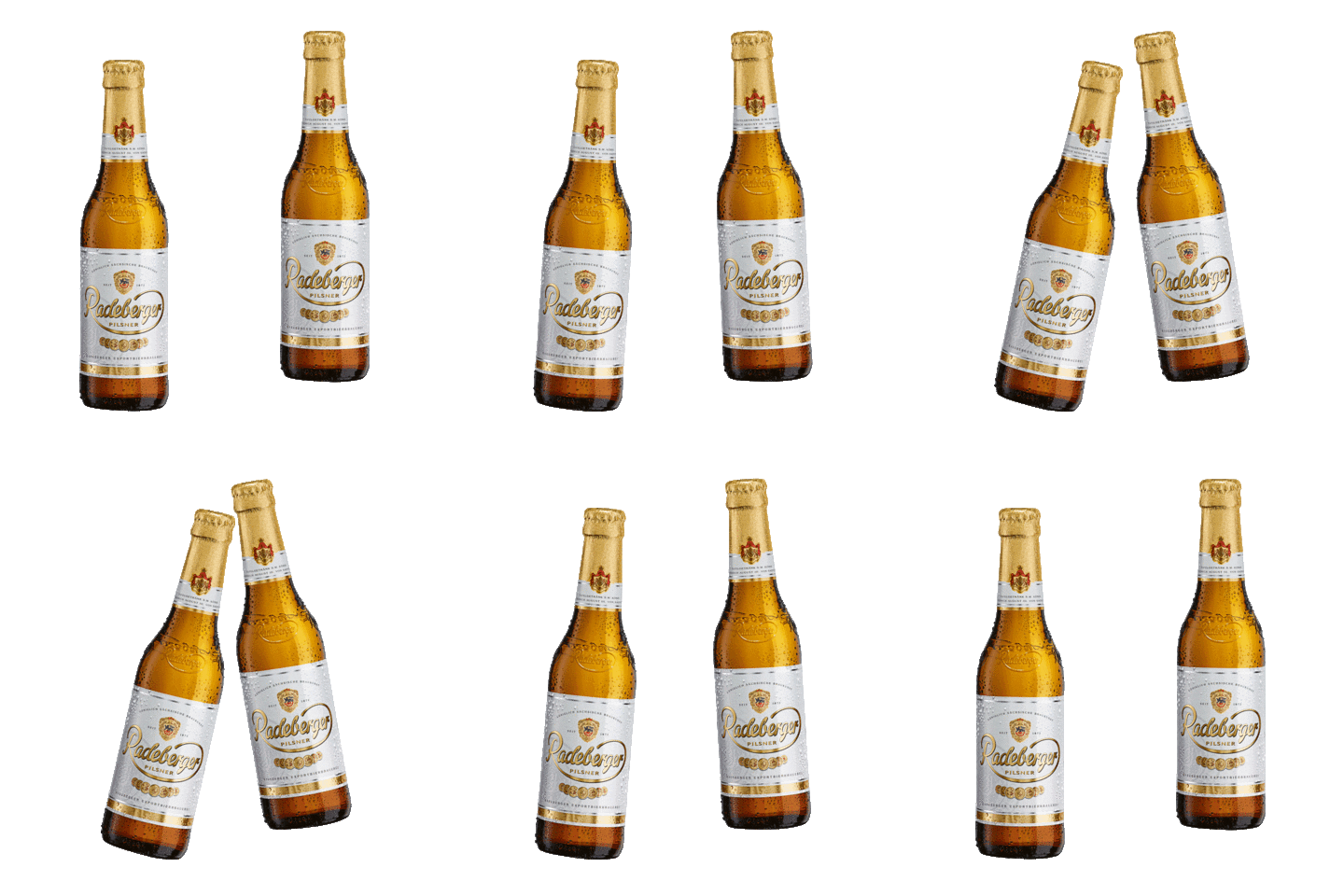
Check the name of the manufacturer. Nothing but Radeberger Exportbierbrauerei GmbH should be written on the label.
-
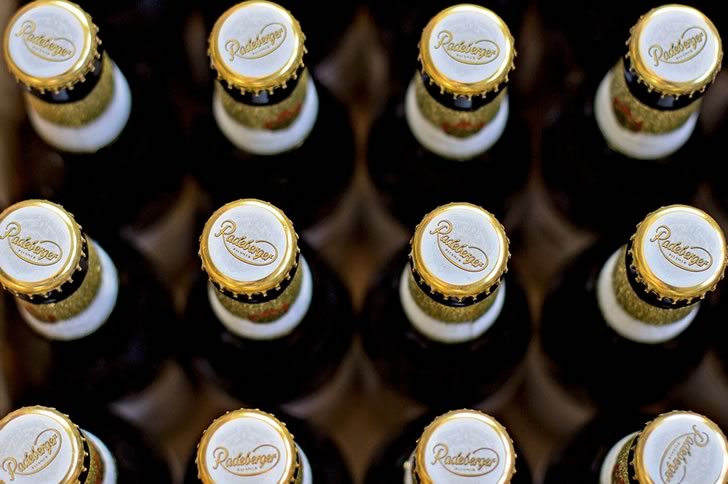
Find the logo on the Internet and make sure that it matches the one in real life.
-
Pouring the drink into glasses. The foam should have the purest white color and not settle within 5 minutes.
Interesting facts
-
When the beer was supplied to the royal court, the king himself visited the company. From that time on, the label began to indicate: "A drink of His Majesty King Frederick Augustus III of Saxony".
-
To this day, the drink is produced using traditional technologies.
-
If a tourist decides to visit the brewery, he or she will be offered to drink Carlsfeld water.
-
Beer is included in the beverage menu of HAPAG LLOYD and GERMANIA airlines. It can also be found on board AIDA ships and even in the opera house.
Update: 23.03.2020
Category: Beer, Cider, Ale