Sambuca: what kind of liquor, history, what it is made of and composition
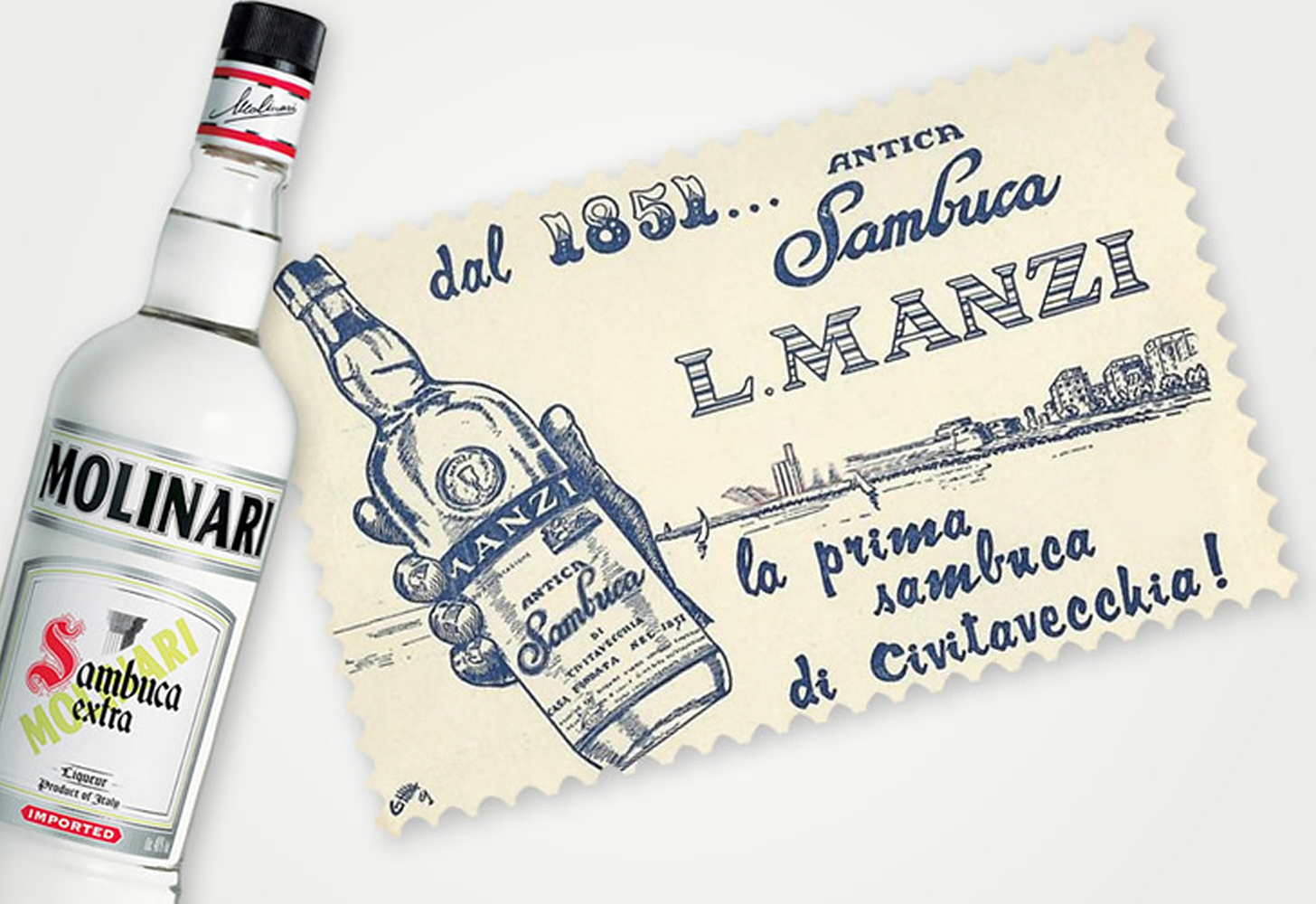
Sambuca - Liqueur with anise aroma and sweet taste. For its preparation, star anise, spicy herbs and elderberry flowers are most often used, but there are other ingredients that can change the color of the drink in addition to taste.
Due to its density, the liquor is great for creating various multi-layered shots, but as a rule, sambuca is drunk neat or set on fire.
History of sambuca
The Oxford English Dictionary indicates that the term comes from the Latin word "sambucus", which means "elderberry".
An interesting fact is that the Greek word "sambuca" was first used as the name for another elderberry liqueur, which was created in Civitavecchia (a city in central Italy on the Tyrrhenian Sea) about 130 years ago.
It is believed that as a result of an unsuccessful experiment by Luigi Manzi from Civitavecchia, the sambuca that we drink today appeared. The first commercial batch went on sale in 1800 under the brand name "Manzi Sambuca".
In 1945, shortly after the end of World War II, Commander Angelo Molinari began producing his sambuca under the Molinari Sambuca Extra brand. From that moment on, the popularity of the liqueur in Italy went up.
The popularization of sambuca throughout Italy has not gone unnoticed. Over time, the liqueur has successfully conquered almost all world markets, and now it is easier to list the countries where it is not sold.
How many degrees in sambuca
Strength, ranging from 38-42 degrees. It all depends on the degree of dilution of the wheat alcohol underlying the drink.
The composition of sambuca
The basic component of sambuca liqueur is high-quality wheat alcohol. Plus, it contains such herbal ingredients as star anise and common anise, elderberry and elderflower extract, as well as a number of aromatic herbs and roots, the names and proportions of which are known only to the producers themselves.
And, of course, all this alcoholic herbage is richly flavored with sugar, as you can easily see after the first sip.
What does sambuca smell like
If you've ever had a drink with anise in it (Greek ouzo, Turkish rakia, Swiss-French absinthe, or our own East Slavic anisovka), you can easily answer this question yourself.
Any alcohol infused with anise will naturally smell like anise. This nucleus plant will mercilessly kill all other odors. Although, it should be noted that some particularly avid connoisseurs of Italian decor can detect a slight hint of elderberry in its smell.
Shelf life of sambuca
In fact, this is a difficult and very diverse issue. If we are talking about an already opened liquor, its shelf life is about four months.
If we are talking about a liquor stored in sealed containers, then in this case it is easiest to carefully read the contents of the label. For example, Sambuca Isolabella can be safely stored for twenty-four months, and Molinari Sambuca Extra is ready to be displayed in your bar for five years.
Calorie content of sambuca
Although this strong Italian alcohol belongs to the category of liqueurs, its calorie content is somewhat lower than the latter.
So, if the caloric content of one hundred grams of an average liqueur is 350 kilocalories, then in our case the bar drops to 240 kcal and is equal to the indicators characteristic of vodka or cognac.
It should be borne in mind that this level of calorie content is also quite high.
Why do they set fire to sambuca
Due to the high content of volatile essential oils, this drink is easy to ignite and no less easy to extinguish. This infernal way of drinking liqueur is especially popular among modern youth.
Why inhale sambuca vapors
All because of the same essential oils. For lovers of anise flavor, inhaling the vapors of an Italian drink can bring additional pleasure. In addition, for people of a bohemian disposition, this process is associated with the dubious charm of decadent cocaine orgies.
Are there glasses for sambuca?
There is a rumor on the Internet that they not only exist, but even have a special elongated shape. However, it seems that this is a myth. In practice, the liquor we are interested in is mostly drunk from ordinary shots.
Update: 05.04.2016
Category: Liqueurs and Tinctures