Types of sambuca - popular colors and brands

It's no secret that the Italian people's favorite anise-elderberry liqueur sambuca has several different modifications produced by dozens of manufacturers. Accordingly, before you start a practical acquaintance with the Appennine variation on the theme of anisovka, it is advisable to get some idea of both its types and the most popular brands.
Dark sambuca
A characteristic feature of this type of drink is its dark blue color, which is achieved by adding licorice root to its composition.
Thus, thermonuclear liquorice freshness is added to the scorching fresh taste of anise. From this point of view, the black variation of the liqueur is rightfully considered the most elite.

The herbal ingredients contained in this drink make it a good digestive, slagging, antitussive and soothing agent.
This sambuca is recommended to be consumed as an aperitif and digestif.
There is also a coffee and chocolate version of sambuca.
By the way, it seems that the chocolate-anise drink inherited the sweetness and viscosity inherent in the latter from molten chocolate.
Instead, its coffee "colleague" boasts a more complex composition.
Thus, for its preparation, as a rule, several varieties of coffee are used at once, growing in different parts of the world.
For example, the famous Molinari caffe sambuca contains beans of exquisite Caribbean Arabica and aromatic Robusta grown on African and Polynesian coffee plantations.
Red sambuca
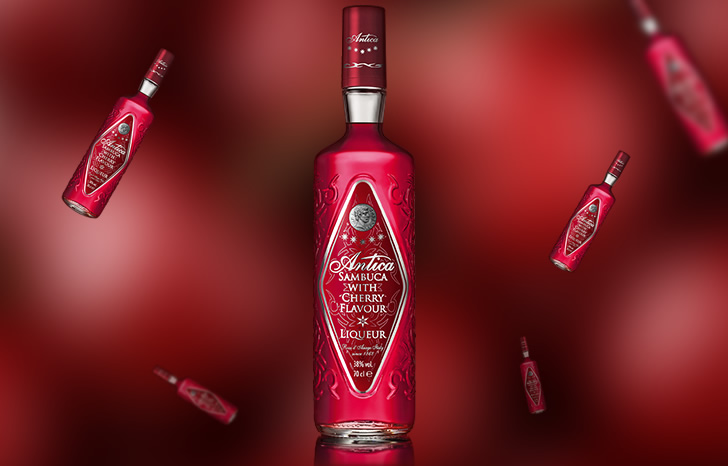
Dessert drink, characterized by a rich red color.
This effect is achieved by adding extracts from various red fruits and berries to the future liqueur.
Thus, producers of the drink create raspberry, cranberry, pomegranate or, say, cherry sambuca.
The fruit and berry component slightly muffles the anise component of the classic drink, making it sweeter, thicker and more viscous.
At the same time, it should be noted that the scale of production of this type of drink is somewhat inferior to the previous two.
Accordingly, Italian anise liqueur of red color is much less common on sale than its white and black counterparts.
However, it is possible that sooner or later the name of this type of drink will become an anachronism, giving way to a more capacious definition: fruit sambuca...
After all, today there are already brands of the drink that contain fruits that have nothing to do with the color red, such as oranges, green apples, pears, bananas, and even mangoes...
Popular brands of sambuca
Liqueur producers are mainly dominated by Italian companies.
But this does not mean that distilleries in other countries refuse to include this drink among their products. Accordingly, both will find their rightful place in our review.
Molinari sambuca

The emergence of this brand is associated with the name of Angelo Molinari, who founded his own artisanal liqueur company in 1945 near Rome.
Thanks to the efforts of Molinari and his family, the Italian regional drink not only entered the global alcohol market, but also successfully established itself on it.
In particular, it was the founder of the Molinari company who came up with the idea to refine rural anise by adding star anise, an overseas star anise.
As a result, one of the hallmarks of modern Italy was born: white Sambuca Molinari, which received not only the state-certified "extra" label, but also the status of a national drink.
In addition to this 42-degree star brand, the aforementioned Sambuca Molinari caffe is also very popular in the world.
This 38-degree drink, created by the nephew of the company's founder, Mario, is now widely consumed both in its pure form and as part of rather colorful cocktails or as a tonic additive to black coffee.
Ramazzotti sambuca

White and black sambuca Ramazzotti (38 and 40 degrees, respectively) is now produced in the vicinity of Milan under the auspices of the Italian branch of the famous alcoholic monster Pernod Ricard. The creation of this brand, which appeared at the end of the XIX century, is associated with the distillery of the same name, which since 1815 has specialized in the development and production of liqueurs and bitters.
If the black variation of the drink is fully consistent with its licorice-anise essence, the white modification of the liqueur can surprise its fans with additional notes of vanilla and violet. At the same time, both types of drink are best used as a digestif.
Luxardo sambuca

The Italian family-owned company Luxardo, headquartered in the Veneto province, has been specializing in the production of classic fruit liqueurs since the early 19th century.
Therefore, it is not surprising that most of the brands of 38-degree anise liqueur presented by the company belong to the red (and not only) fruit and berry sector of the sambuca palette.
However, the innovators from Veneto did not stop there. In addition to fruit, they began to actively develop the theme of spices.
As a result, sambuca varieties with the addition of cinnamon and chili pepper appeared on the market.
All this art delights lovers of sweet and spicy drinks, as well as genuine indignation from connoisseurs of the classics of the genre.
At the same time, the Luxardo house is no stranger to traditional principles.
An example of this is the white Sambuca dei Cesari Luxardo, which harmoniously combines the dominant anise motif with vanilla and cherry undertones.
Di Amore sambuca

The white Sambuca Classico Di Amore, produced by the respectable Turin distillery Barbero, boasts a strength of 42 degrees and an unblemished reputation.
The only conditional deviation from the textbook canon can be considered the addition of lemon peel to the drink, which somewhat reduces the natural sweetness of the liqueur.
Sambuca by Cellini
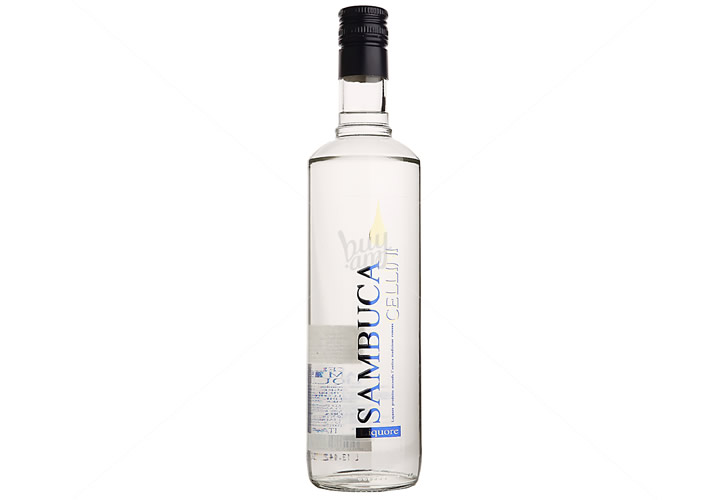
Sambuca Bianco Cellini with a strength of 40 degrees is produced by the Bottega family distillery, located 50 kilometers from Venice. The drink is part of a multi-caliber line dedicated to the famous sculptor and jeweler Benvenuto Cellini, and is primarily aimed at people of bohemian disposition. In addition to the traditional anise flavor, the liqueur has light floral notes.
Cesare sambuca

The name "Cesare sambuca" in the post-Soviet space can refer to as many as two 40-degree white drinks: Italian sambuca Originale Cesare da Sesto and Spanish (or rather, Catalan) sambuca Cesare imperator...
The first of them is produced in the vicinity of Turin by the local wine company Perlino.
Interestingly, despite its transparency, the constant anise dominance in this liqueur has a slight licorice overtone.
The second one, produced by Teichenne, is considered a very worthy substitute for the Italian classic.
Wakkari sambuca

The 38-degree white sambuca Vaccari and its black (sister) sambuca Vakkari nero are produced by one of the world's oldest distilleries, the Dutch company Lucas Bols. Launched in 1990, the brand was named after Arturo Vaccari, the creator of the Galliano vanilla-anise liqueur.
Both the white and black varieties of the liqueur are made on the basis of Italian alcohol and, according to experts, they fully meet the Apennine standards.
However, the relatively low strength of the drink makes it less bright compared to the same 42-degree Molinari.
At the same time, this Dutch alcohol, and not its more venerable Italian counterparts, is the most popular anise liqueur in Mexico.
Villa Viola sambuca
The transparent 38-degree sambuca Villa Viola drink is produced by the German trading and distilling house Karlheinz Haus.
This good quality anise liqueur with a light vanilla flavor is recommended for cocktails.
Perhaps the drink lacks the true Appennine charm, but, like any German product, it is made in strict compliance with the proper rules.
Accordingly, it is unlikely to surprise you with anything, but it will not bring any special disappointments either.
Update: 13.04.2016
Category: Liqueurs and Tinctures