Chacha: what is it, how many degrees and how to drink it
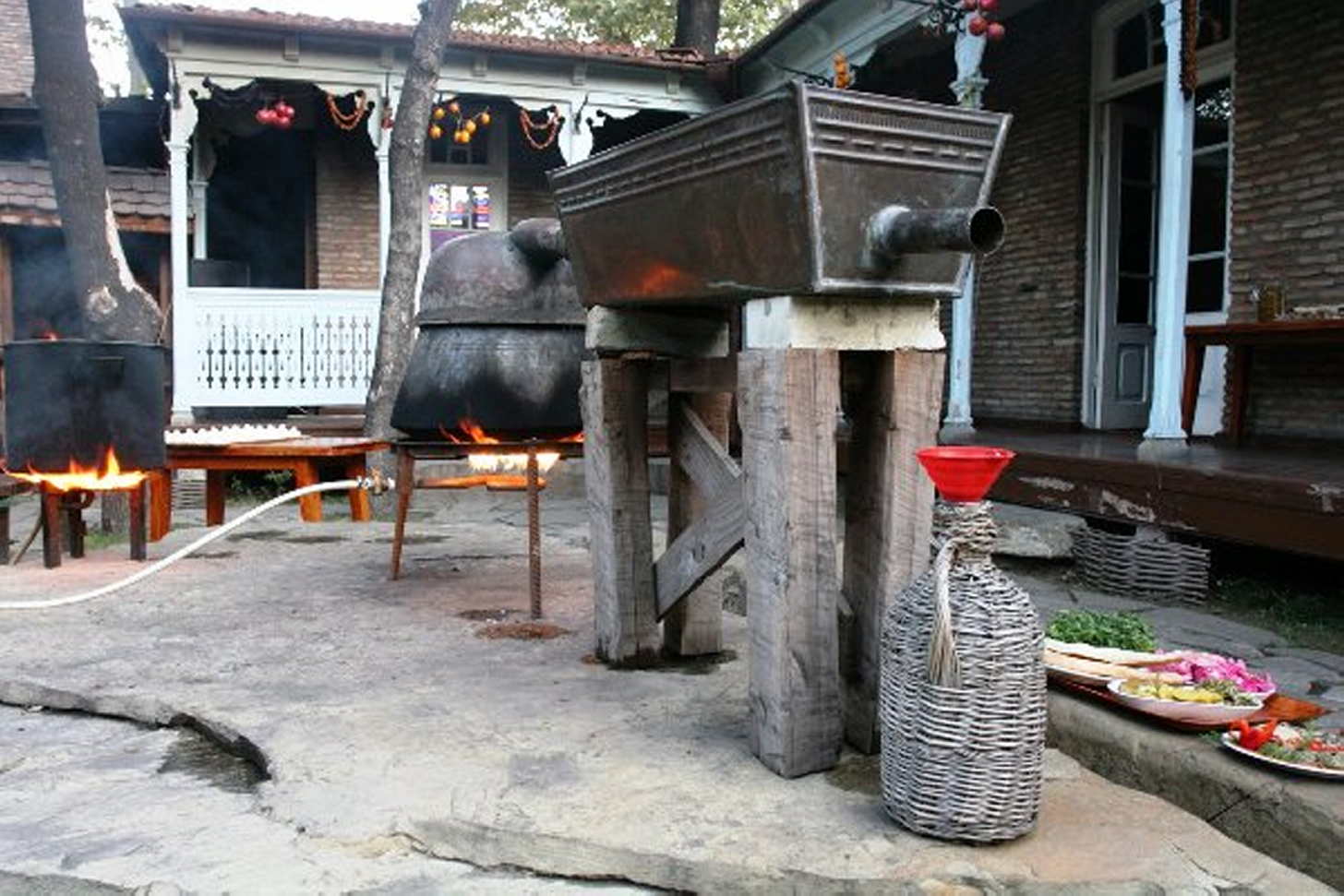
The national Georgian alcoholic drink chacha, which is now widespread throughout the Caucasus region, has long gained well-deserved popularity in the post-Soviet space. Every sip of this elixir of Caucasian longevity conceals memories of the warm sea, flowering valleys, picturesque mountains and unique cuisine.
However, many chacha lovers know very little about this distinctive drink. Therefore, we offer everyone a small alcoholic and ethnographic sketch on this topic.
Find out the difference between grappa and chacha.
What is chacha made of
To begin with, chacha is not vodka. Real chacha is made from grape pomace mainly in eastern Georgia - Kakheti.
For the production of chacha, the Rkatsiteli grape variety is used, which grows exclusively in eastern Georgia and is used to produce famous Georgian wines, both according to European and Kakhetian technology - by fermenting with the pulp and ridges... It is by distillation, from the solid mass remaining after the production of these wines, that the original chacha is obtained.
The western regions of Georgia are famous for their soil and climatic conditions, and they grow large reserves of various fruits and berries, which are also used to make chacha, but Georgians do not consider it to be such, preferring to call it brandy.
If you are offered to taste chacha made from the Isabella grape variety, you should know that this variety in Georgia is a hybrid and grows mainly in the western part of the country - Guria, Imereti, Mingrelia, Abkhazia, Adjara, but recently the production of this variety has significantly decreased...
There is also another variety called Kachichi - it is very old and rare, it is very rare to find chacha from this grape.
It is also made from grapes: liqueur and liqueur, tincture
How to store chacha
The drink we are interested in is best stored in glass bottles in a moderately cool, dark place. In this case, it is not worth taking any risks with plastic containers. Strong alcohol stored in it for a long time can acquire an unpleasant technical flavor.
Chacha - degrees
If someone asks you how many degrees of chacha are in chacha, you can safely answer: "a lot". In fact, this is one of the strongest brandy varieties. The strength of the average home distillate ranges from 55-60 proof. The store-bought factory version contains 45-50 degrees. If you're looking for a thrill, you'll likely be able to find a 70-degree fusion drink. At the same time, due to its fruit and berry essence, the insidious Georgian aquavit is extremely easy to drink.
What does chacha taste like?
Like all grape and fruit distillates, traditional Georgian spirits have a mild, tart flavor. At the same time, the classic grape drink has a pleasant raisin aftertaste, especially pronounced in yellow chacha. Of course, if we are talking about fruit, herbal and nut tinctures, then the corresponding flavors will be present in this case.

How to drink chacha and what to eat
The classic way
As a rule, Georgian pomace brandy is drunk in small doses from small glasses. When it comes to a high-quality drink, it should be at room temperature so that you can fully enjoy its flavor. If you have a simpler distillate, it should be cooled to a temperature of 5-10°C; then you will not be bothered by its characteristic not particularly pleasant aftertaste.
Georgian rural classic
A glass of warming drink, drunk on a frosty or just cool morning before working outdoors. At the same time, residents of the western part of the country prefer to put something sweet in their mouths (for example, grape or fruit churchkhela) as an appetizer; residents of eastern Georgia, in this case, prefer pickles or phali.
Chacha in Abkhazian
Served as an aperitif before the main meal. However, it should be borne in mind that the subsequent meal itself is accompanied by wine drinks. Before drinking chacha with wine, you should think twice about the consequences.
And, of course, it's nice to have a few glasses of chacha with all kinds of Georgian dishes: both first and second courses, both cold and hot, both snacks and sweets... However, in this case, it should be borne in mind that Georgians themselves consider it a sign of bad taste to drink chacha during family holidays or any other solemn feasts.
There are also a number of cocktails based on the distillate we are interested in; for example: "Sakartvela", "Tbilisi", and "Georgian peach". However, it is mainly drunk by Tbilisi majors and Western tourists who are tempted by them. And, to be honest, chacha, in our opinion, is not the most successful ingredient for cocktails, as the ice added to them significantly mutes the distinctive flavor of Georgian distillate.
Calorie content of chacha
Like all types of brandy, the drink we are interested in is quite high in calories. Its energy value is 225 kcal per 100 g. However, if you decide to join the joys of very nutritious Georgian cuisine in an adult way, then the calorie content of the drink that accompanies it should be the last thing you worry about.
Chacha: benefits and harms
In moderation, Georgian distillate is an excellent warming and anti-cold remedy. Although, it should be admitted that when fighting a cold, it is much more appropriate to add strong alcohol to tea with honey and lemon than to drink it in its pure form.
In addition, this drink, again in reasonable doses, can have anti-edematous and anti-inflammatory effects.
This type of brandy also helps to improve digestion and speed up metabolism.
And finally, moderate consumption of this strong drink will help to increase the tone of the cardiovascular system by raising blood pressure.
As for the harm If we are talking about the importance of the Transcaucasian elixir for our body, then in addition to the usual warnings associated with alcohol consumption, we should take into account such a feature as the artisanal production of the drink. The fact is that during its distillation, local winemakers do not separate the resulting alcohol into fractions. Accordingly, the drink contains highly toxic fusel oils contained in the tail fraction of the distillate. And even further cleaning is not able to completely correct the situation. Therefore, when you open the cherished bottle, once brought from the sunny Transcaucasia, be moderate and reasonable.
Update: 18.02.2017
Category: Brandy and Cognac