Pisco - a grape drink from Peru
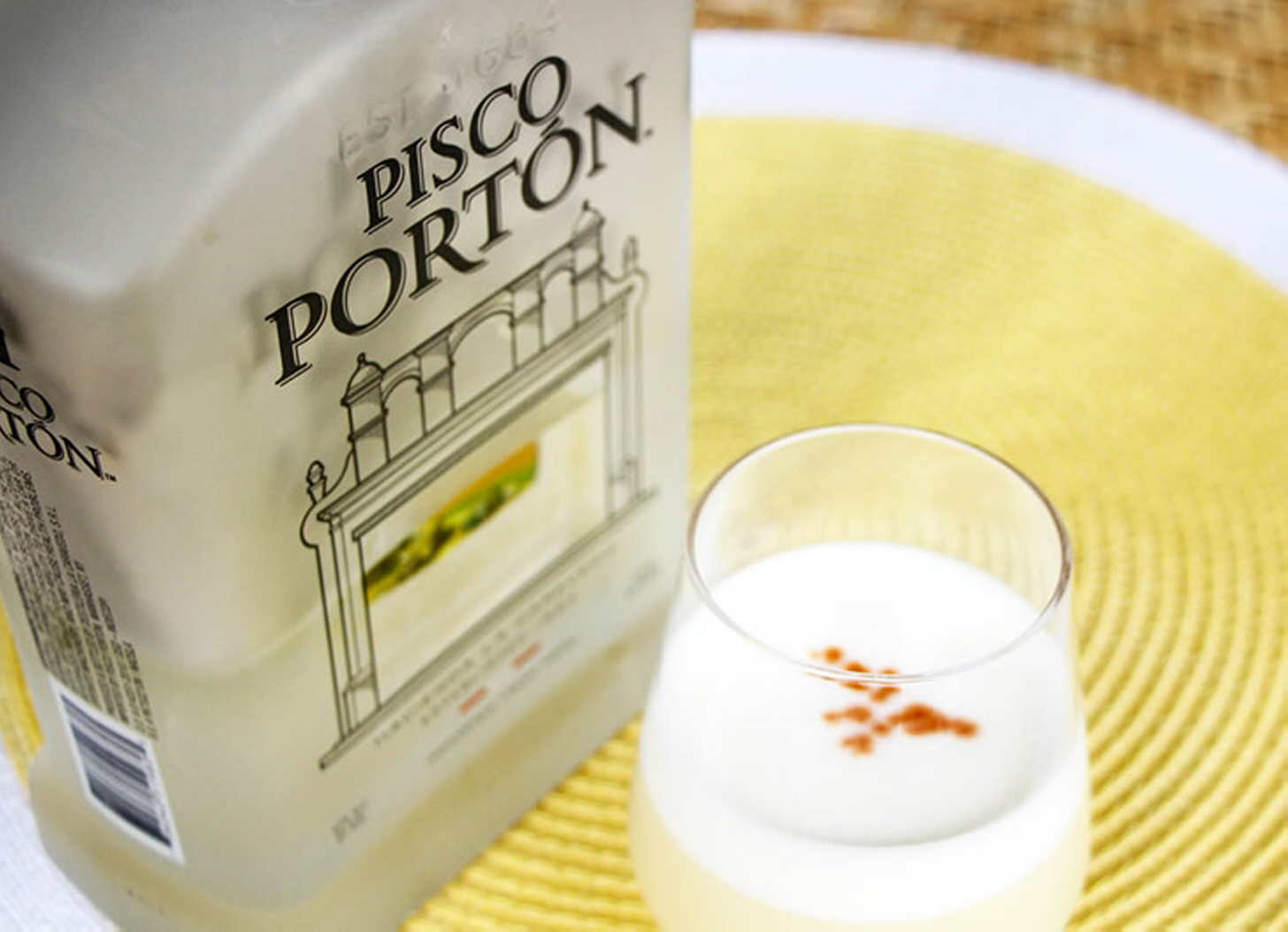
A true alcoholic gourmet could not ignore this legendary drink, but what is pisco really? How it is drunk, where it is produced and what it is made of? We will try to reveal the answers to all these questions below...
About alcohol
Pisco (Pisco) - Pisco is a strong (30-45%) transparent or yellow-amber alcoholic beverage produced in certain areas of Peru and Chile from muscat grapes by distilling (distilling) young wine. In fact, pisco is a kind of grape brandy.
At first glance, it seems that this is an analogue of chacha or grappa, but for the production of pisco, no cake is used, but only good, high-quality grapes - this is the difference. However, from the point of view of the alcoholic world, pisco is just a brandy, that is, a drink obtained by distilling fermented raw materials, in this case grape, and in another - berry or fruit.
Alcohol is recommended for those who suffer from low blood pressure. Also, grape vodka incredibly improves tone. After drinking pisco, you can taste the sweet flavor of grapes on your lips, which once again proves the elegance of this drink.
The legend of the flying bird
There is a legend about some brave Indian sailors who decided to swim across the Ocean to get to the center of the Universe, the mystical island «Te Pite about Te Henua», the name of which is translated into Russian as «The navel of the Earth».
For a long time, sailors plowed the vast expanses of the ocean, completely desperate to find the mysterious center of the universe.
The thought of imminent death never left them. Suddenly, a flying bird appeared on the horizon and showed the exhausted seekers the way to the land of the blessed, and thus they were saved.
In honor of this bird, the Indians named the drink pisco, which translates literally as «The flying bird»
The official story
To the south of the Peruvian capital, Lima, is the Pisco Valley, which was inhabited by the tribe of the same name during the Spanish conquest. Indians made a low-alcohol drink from corn here. The Spaniards brought grape vines from Europe and taught the local population winemaking. Wine began to be stored in jugs that were previously used to make an Indian corn drink, so the drink was later called pisco.
During the war between Chile and Peru in the XIX century, the Chileans, who occupied part of Peruvian territory, tasted pisco. They liked it, and soon Chile began to produce a strong alcoholic beverage with the same name. To this day, there are disputes between Peru and Chile for the right to call pisco their national drink.
Production technology
Despite the same name, Peruvian and Chilean pisco are strikingly different from each other.
Peruvian pisco
Made from pure grape juice without pulp, skin and seeds.
After fermentation, the juice turns into a young wine, which is distilled only once, producing a distillate with a strength of about 43 degrees.
Diluting the drink with water and keeping it in oak barrels is strictly prohibited.
Before being sold, the finished pisco is stored in glass containers for at least 3 months to avoid contact with substances that can affect the smell and taste.

In the photo, Puro and MostoVerde piscoChilean pisco
Distilled two to three times, then purified with charcoal filters, diluted with water to reduce its strength and aged in oak barrels for 2-10 months. It produces a flavorful drink with a fruity aftertaste.
The Chilean method is very similar to the classical cognac production technology in France.
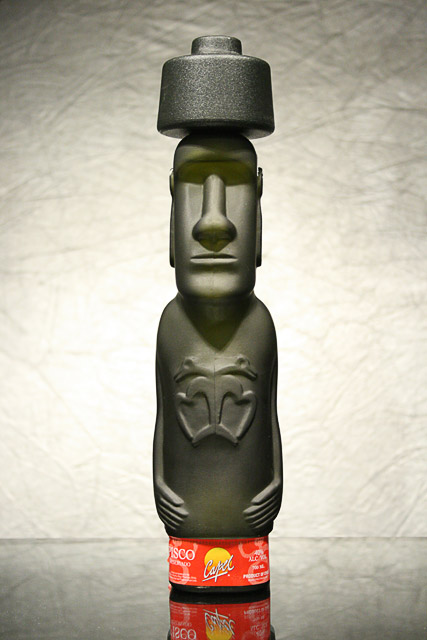
Chilean pisco in the style of one of the statues of Easter Island

Types of pisco
The drink is classified by the country of production, grape varieties used, and aging time.
Peruvian pisco comes in the following types:
Puro (clear or transparent)
It is made only from the Quebranta grape variety and has a weak flavor.
Aromáticas (flavored)
It has a pleasant persistent smell, is made from Muscat, Italia, Albilla and Torontel grapes (one drink - one variety).
MostoVerde (green)
The fermented wort is distilled, which gives it a green tint and a sweet aftertaste. This is the mildest and most expensive variety.
Acholado (hybrid)
Different grape varieties are used.
Types of Chilean pisco:
Traditional (30-35%)
It is aged for 2 months, has a pale yellow hue and a light woody aroma, tastes like diluted rum.
Especial (35-40%)
The aging period is 4 months, the taste is similar to bourbon (American corn whiskey), but sweeter.
Reservado (40-43%)
It is stored in barrels for 6 months before being sold, and its organoleptic properties are similar to cognac for 3-5 years.
Gran Pisco (40-43%)
10 or more months of aging, elite pisco is dark yellow in color with a rich woody aroma and subtle sweetness.
How to drink pisco

You can drink pisco in its pure form. It also mixes perfectly with other drinks and juices, opening up new flavor possibilities for bartenders around the world to create cocktails.
In bar culture, alcohol is represented in the famous cocktail «Pisco sauer», it is included in the group of classic cocktails of the IBA (International Bartenders Association).
An interesting fact
Pisco has been drunk in Peru since the 16th century. And since 2004, on the first Saturday of February, Peruvians have been celebrating Cocktail Day Pisco sauer (National Pisco Sour Day - the day of the country's most popular national drink based on pisco.
On this day, Peruvians light up - massive free tastings are held in all cities of the country, music, dancing, performances and competitions for the best cocktail are everywhere.
Update: 15.06.2016
Category: Brandy and Cognac