Chianti Classico: history, overview, types, facts and other useful information
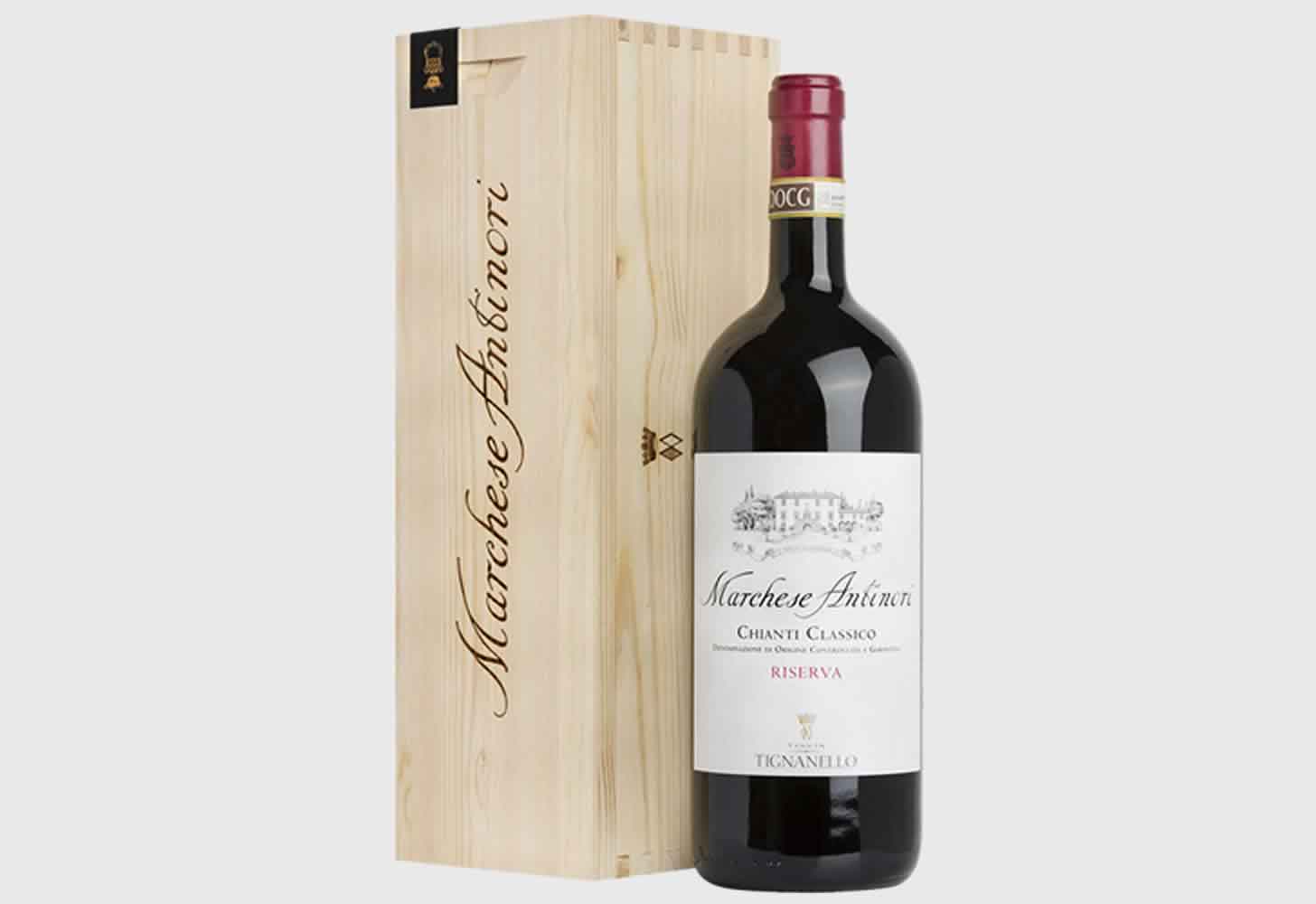
Chianti Classico - it is a dry red wine produced in Italy (Tuscany region). The drink is based on Sangiovese grapes.
The wine has the DOCG category ("designation of origin controlled"). For wines produced in Italy, this is the highest category in the classification. Chianti wines are also produced in the provinces of Pisa, Florence, Prato, etc. д.
The history of Chianti Classico
Italian scientists believe that Chianti was produced by the ancient Etruscan civilization, which lived in the territory of modern Tuscany. Etruscans had a great influence on the ancient Romans, who adopted their winemaking methods.
The first written mention of the word "Chianti" dates back to the XIII century. At that time, the cultivation of wine grape varieties was actively developing in Florence. Merchants from 3 different villages of Gaiole, Radda and Castellina joined forces to create the "Chianti League" to promote Sangiovese alcohol.
By the end of the eighteenth century, in 1796, Duke Cosimo III de' Medici of Tuscany passed a law according to which the official production of wine was assigned to the settlements belonging to the league and the town of Greve.
In 1932, the Italian government amended the law, adding to the list the adjacent territories of Cicchio, San Casiano, Barberino Val d'Io, Barberino Val d'Io’Elsa, Strada and Robbiano. By the middle of the XX century, the production area will occupy an extremely large territory in the center of the Tuscany region.
Chianti Classico received the DOCG quality label in 1984, and before that the DOC category in 1967. Modern production technology is no different from that used hundreds of years ago. It is called the "Ricasoli Formula" or "Chianti Formula".
In the 1870s, V. Ricasoli, who was nicknamed the "Iron Baron" for his tough character and activities, ended his career as a politician and devoted himself entirely to his favorite business - winemaking. He grew many grape varieties (Cabernet Sauvignon and others), constantly experimented, but all to no avail. The only variety that lent itself to the work was local Sangiovese.
This is how the legendary formula was born, which gave us Chianti red wine. It involves blending 70% of Sangiovese, 10-15% of Canaiolo, and the remaining 15-20% of Trebbiano or Malvasia.
As for the modern intricacies of production, 80% is given to Sangiovese, as the most important among not only Tuscany, but also Italy. He is very capricious, he has not yet fully submitted to winemakers. The wine is meant to have a balance: simultaneous depth and weightlessness of flavor.
However, not all winemakers want to preserve traditions. Someone produces Chianti entirely from Sangiovese. Laws do not provide them with a field for experiments, because the use of foreign varieties is prohibited. Ingredients must be grown within Tuscany, with no more than 10% of the 37 permitted species of white berries. In 2006, it was forbidden to add even this tiny share to Chianti Classico.
Vineyards occupy hilltops at an altitude of no more than 700 meters above sea level. Chemical fertilizers are not allowed, only watering is allowed. Italians use the classic method of slow secondary fermentation. Berries can be slightly dried before they become wine.
Harvesting is usually done by the end of October, and the wine ripens in oak until the first of March next year. This is the minimum aging. Types of Riserva are infused for more than 2 years.
The symbol of Chianti Classico
The popularity of the wine was rapidly gaining momentum. By the beginning of the XX century, official producers could no longer fully satisfy customer demand, and it began to be counterfeited both in Tuscany and abroad. To protect people from fakes, the producers created a body to protect the brand.
The Consortium for the protection of the wine brand was founded by a group of 33 producers on May 14, 1924. To this day, the symbol of the Chianti Classico Consortium is the "black rooster in a golden field", but not all bottles have this symbol. Design depends on the winemaker.
According to a Florentine legend, this bird helped the city's inhabitants to appropriate part of Siena's land. Florence and Siena were in conflict, and the population decided to mark clear boundaries of ownership. They concluded an agreement according to which a rider would be sent from one city to another at the first crow of a rooster. The point of their intersection will be a new border. The Florentines were lucky: their black cock crowed before the Sienese, and the rider traveled a longer way.
Thus, thanks to the bird, Florence expanded its territory by 20 kilometers at the expense of Siena's lands. There are 2 versions of why the Florentine bird woke up early: some believe that the morning was sunny in Florence and rainy in Siena, and others that the Siena rooster was fed to the brim, and the Florentine rooster could not sleep on an empty stomach, so he screamed out loud.
What is the difference between Chianti Classico and regular Chianti?
According to the current owner of the company Barone Ricasoli, a descendant of the creator of the recipe, the wine is distinguished by its seriousness and demandingness to a certain method of production and consumption. It is produced on a separate historical plot of Chianti Classico, where the grapes are harvested. In 1993, the family of Baron Ricasoli bought the territory from a wine concern from Australia. Now they are reviving the former glory of the drink, creating various developments, have already transplanted 2 hundred vines and rebuilt the premises. Chianti Classico is an example of a true Chianti.
Types of Chianti Classico
-
Annata
12 months of aging, 13% alcohol. Ruby red color with purple tints. It smells of blueberries and cherries, spicy and floral notes are present. Unique rich flavor. Long fruity aftertaste.
-
Riserva
24 months of aging, 13%. Ruby color. The aroma is fruity and berry, you can feel the cherry. Dry on the palate with peppery notes. Long fruity aftertaste.
-
Gran Selezione
30 months of aging, 13%. Ruby red color. The aroma is rich and spicy. The taste is dry and balanced. Long aftertaste.
-
Bibbiano Chianti Classico
Created from all Bibbiano vines. Not aged in oak, so it is lighter in flavor. Fresh, pleasantly sour. You can catch blackberry and plum hints.
-
Montornello Chianti Classico Riserva
Also belongs to the Bibbiano farm, but is grown on a separate plot of Montornello. Aged in French oak for a deeper flavor. Color - deep ruby, aroma - musk and fruit. It tastes bright, but at the same time refined.
-
Vigna del Capannino Chianti Gran Selezione
The pride of the winery. Dark ruby in color, it has a multifaceted taste with fruity, mineral and balsamic hints.
How and with what to drink Chianti Classico
To enjoy the wine to the fullest, you should open it a few hours before serving so that it can breathe.
The ideal serving temperature is 16 °C to 18 °C. If the drink is warmer, then the strength of the alcohol will block the aroma, if it is colder, then it will start to sour. Serve in a tulip glass, tapered upwards to allow the bouquet to fully develop.
The versatility of the wine allows you to combine it with dishes from a large number of cuisines. Ideal for fried meat, stews, game, expensive cheeses. Even combinations with spicy Chinese or Indian food and Japanese sushi, which are so popular nowadays, will be a winner.
How to distinguish a fake Chianti Classico
-
The first and most obvious thing is the black rooster in a red frame on the packaging. But it is not always available.
-
The label should have the abbreviation DOCG Chianti Classico DOCG Chianti Classico. This is a guarantee that the wine is produced in Tuscany.
-
Check the country code on the back of the label. For Italy, this is a series of numbers from 80 to 83.
Interesting facts
-
The British were so fond of this wine that they nicknamed Tuscany Chianti County.
-
In 1867. at the International Exhibition in the French capital, Chianti wine received a gold medal for the first time in the history of Italian wines.
-
This wine has been mentioned many times in movies, books and PC games.
-
Chianti Classico is only a section of the "Chianti zone" located between Florence and Siena.
Update: 18.03.2020
Category: Wine and Vermouth