William Lawson's whiskey: history, overview of taste and types + how to distinguish a fake
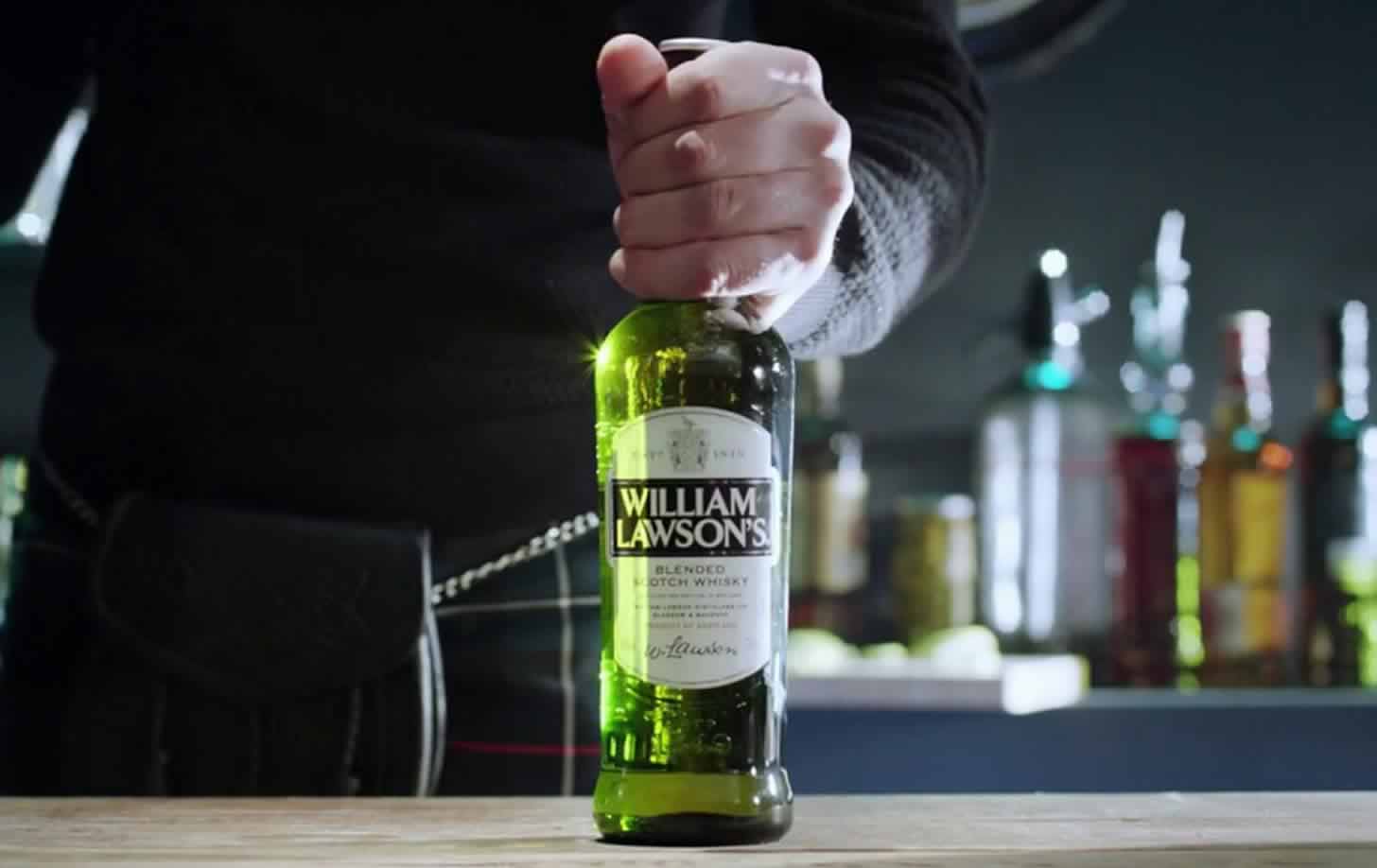
One of the most affordable and well-known types of blended scotch is produced in the north of Scotland, in the Highland region.
The William Lawson's brand is among the top ten best-selling whiskeys and regularly receives awards at international competitions. The drink does not belong to the elite products, but, thanks to the optimal combination of price and quality, it is invariably popular, especially among young people.
However, the Scottish brand had to overcome a lot of difficulties before it could find its place in the sun.
The history of the company
Fans of the famous scotch are unlikely to suspect that initially, William Lawson's products were not produced in Scotland at all. The company was founded in the mid-nineteenth century in Irish Dublin, after which production moved to British Liverpool and only in 1967 settled at its current address.
It is interesting that William Lawson was not actually the founder of the company, although he took an active part in its development and promotion of products. The Irishman's hard work and dedication were appreciated and one of the whiskeys was named in his honor. For some time William Lawson was a director of the company, but for unknown reasons left it. The company itself was renamed William Lawson Distillers Ltd only in 1963.
Over the years, the company has experienced ups and downs. The most difficult was the period of the Great Depression and Prohibition in the United States, when whiskey production was practically stopped.
The times of the Second World War were also difficult: it was possible to restore the previous production volumes only a few years after its completion. The acquisition of the Macduff Distillery, located near the Devereux River, became a landmark for the manufacturer.
The plant produces single malt whiskey "Glen Deveron", which is the basis of all William Lawson blends.
In 1980, the company became part of the "General Beverage Corporation", which was later acquired by the Bacardi family.
The merger of two large corporations led to the creation of the alcohol giant Bacardi-Martini: it now owns the Scottish whiskey brand.
For many years, the famous specialist Tom Atken has been working on the creation of William Lawson's blends. The great master was succeeded by his student Stephanie MacLeod, one of the few women working in the industry.
Specifics of William Lawson's production
A unique production technology determines the special bouquet of William Lawson's scotch without peaty flavor and rough character characteristic of most Scottish drinks. It implies:
The use of mainly unsmoked barley as a raw material, which excludes a smoky tint in the aroma.
The inclusion of 40 grain and malt components in the blends, the "soloist" among which is single malt from Macduff. A high share is also made up of spirits from the Royal Brackla and Aultmore distilleries.
The distillation of single malt whiskey "Glen Deveron" (the heart of the blend) is carried out within 72 hours instead of the traditional 48 hours. Longer contact with copper softens the taste of the drink.
The design of the distillation columns at the main distillery is arranged in such a way that only the purest and lightest spirits condense in the process.
The whiskey is aged in bourbon and sherry barrels.
In addition to the original production technology, the brand stands out for its provocative advertising, which often features celebrities and harsh Scottish landscapes. The main slogan of the marketing campaign: "No rules". Great scotch" ("No rules. Big Scotch").
Overview of types and flavors of William Lawson
Bacardi-Martini has preserved the best blends of William Lawson’s" and continues to produce products under the legendary brand. It combines 4 variants of whiskey:

William Lawson’s Finest Blend, 40%
The product is a classic blend of medium strength. The blend is dominated by Glen Deveron malt spirits, and the drink itself is the closest to the original whiskey released in 1849. Main notes in the aroma: dried fruits, sweet spices, cream, chocolate and oak. Taste: sweet, slightly spicy, with honey and nutty hints. The finish is smooth, warming.
William Lawson’s Scottish Gold, 40%
The 12-year-old blend is characterized by pronounced sweetness and a pleasant honey color. The aroma of the drink is fresh, with tones of apples and malt. The taste has notes of roasted nuts, raisins, cherries, allspice and butter.
William Lawson’s 13 Year Old, 40%
The base is 12-year-old scotch, refined by an additional year of aging in bourbon barrels burnt from the inside. Thanks to this treatment, chocolate accents appeared in the bouquet of the drink, and the color came closer to the color of old gold. The aroma of the whiskey includes notes of nuts, flowers, caramel and green apples. The taste is predominantly fruity and creamy with a coffee and biscuit aftertaste.
William Lawson’s Super Spiced, 35%
One of the successful developments of Stephanie McLeod, who ventured to infuse the blend with a mixture of spices, including cinnamon, vanilla, nutmeg, and add maple syrup and apple concentrate to the whiskey. The unusual drink is aged in sherry barrels, which gives it a rich caramel color and spice flavor. The taste is dominated by sweet creamy notes with accents of figs, candied fruits and citrus. The drink is delicious in any form: solo, on the rocks or in cocktails.
How to distinguish a fake William Lawson
To buy authentic William Lawson scotch’s, you should know the peculiarities of its design:
The bottle should have embossed designs and inscriptions: the coat of arms under the neck, the engraving "ESTP 1849" in the lower part and "William Lawson's" on the back of the vessel. The convex image of the coat of arms is also present on the product label.
The lid of a real Scotch whisky is made of metal. The bottle has a two-color color: black on the rim and silver on the top. The flat surface of the lid shows the company's coat of arms.
The original drink may or may not have a dispenser.
The label should be applied smoothly, without glue stains and misspellings.
No sediment or cloudiness is allowed in the contents of the bottle.
To exclude the possibility of purchasing a counterfeit, it is better to make a purchase in specialized stores, and not in a retail network.
Update: 29.01.2019
Category: Whiskey and Bourbon