Asti champagne: history, production process, how to drink, popular brands + how to distinguish a fake
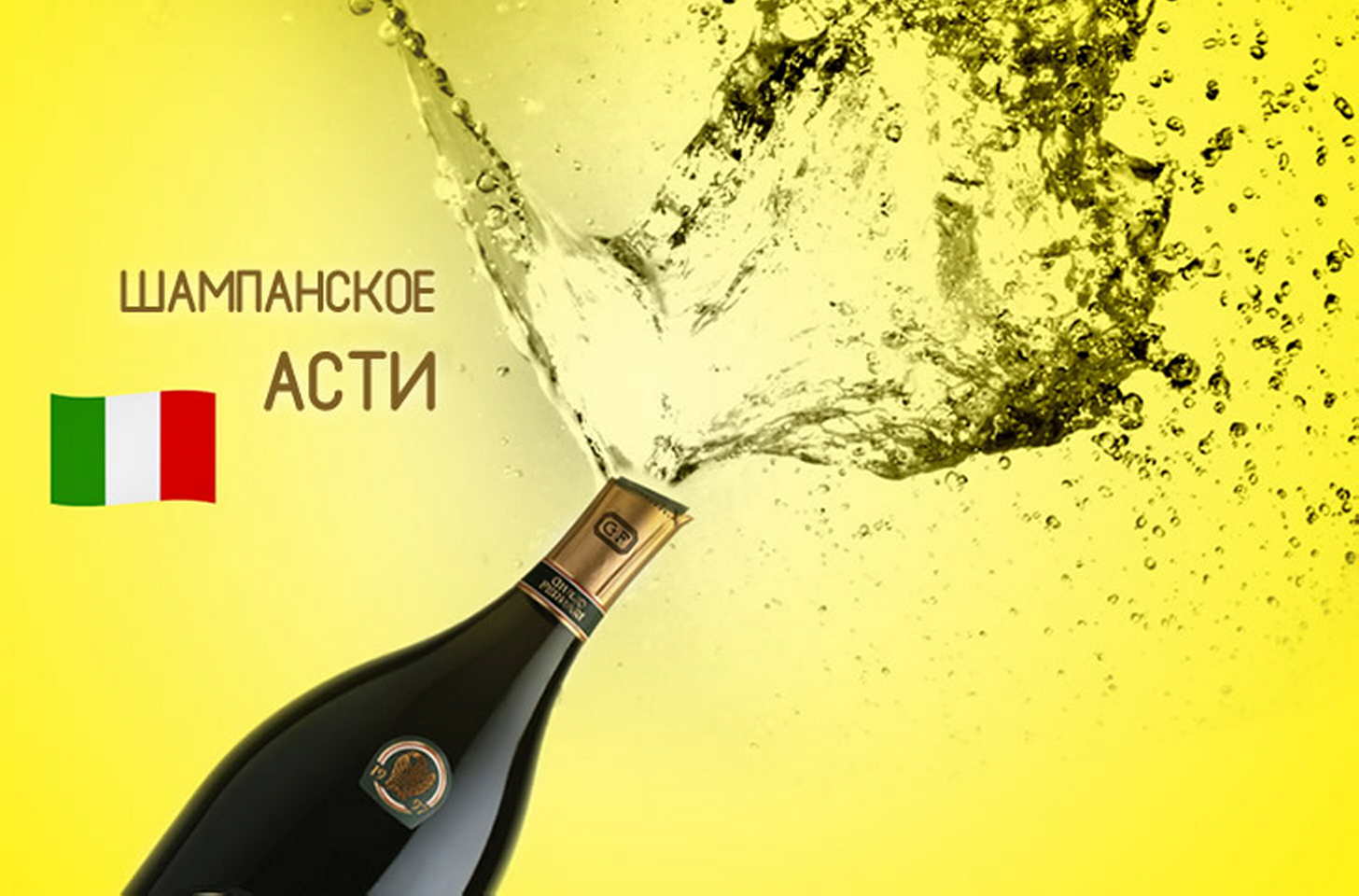
Asti is made from a special grape variety - white muscat, which is grown exclusively in Italy, Piedmont region. The variety is one of the oldest in the region, characterized by high sugar levels and sufficient acidity.
Despite the prestigious Italian classification DOCG, sweet Asti wines are not appreciated among wine lovers.
There is also a risk of buying low-quality products under the guise of Asti.
The history of Asti sparkling wine
The White Muscat grape variety is quite ancient, originating from the eastern Mediterranean and probably introduced to Piedmont in the sixteenth century.
In 1865, Carlo Gancha applied French champagne technology to the wines of his company in Canelli. First, red drinks "leaked" through the experiment, then it came to white muscat. At that time, the resulting product was called "Muscat Champagne" (Moscato Champagne).
After Asti's production technology spread across Piedmont, other companies began to produce the wine they loved. Among the first was the famous Martini & Rossi distillery in the city of Montechiaro d'Asti.
In the XX century, Federico Martinotti improved and patented the method of producing sparkling wines. Alfredo Marone then improved the pressure filtration system. This is how the ideal Asti champagne production technology was born. Large volumes of the drink were exported under the name Asti Spumante.
In 1993, Asti Spumante was awarded the DOCG wine label (controlled and guaranteed status of origin), so its production must follow strict rules. For example, vineyards should be located only in hilly areas, sparkling wine should be produced mostly in single-tank fermentation, and the sweet taste should be guaranteed by a special filtration technique.
Asti production process
Asti champagne is born from the White Muscat grape variety. Vine characteristics are enhanced by climatic factors and soil properties. The production area is located mainly in the province of Asti and partially in Cuneo and Alessandria.
The vineyard density should be at least 4000 vines/ha, with a grape yield of more than 10 tons/ha.

Valuable aromatic substances accumulate in the last weeks before harvest and reach their maximum level in the first days of September. During this period, grape harvesting begins.
All operations are carried out manually to preserve the integrity of the berries and convey their flavor to the drink intact.
After harvesting, the grapes are immediately sent to the pressing room, where they are transformed into must in large tanks.
The raw materials are pressed after filtration from unnecessary impurities using a soft method called "soffice". The wort obtained in this way is cooled to low temperatures (slightly above zero) to avoid the onset of unwanted fermentation.
Chilled must is brought to a temperature of about 20 degrees and yeast is added. When the alcohol content reaches 5.5%, the drink enters the fermentation or secondary fermentation stage.
Future sparkling wine is fermented in autoclaves - closed vessels under pressure. In them, carbon dioxide (a by-product of the process) is captured and dissolved in the wine. It is the source of bubbles in the drink. This method is called the Martinotti method after its creator. Although outside Italy it is called the "Asti method".
The fermentation of Asti champagne is stopped by cooling when the alcohol content is 7-9% and the residual sugar is 3-5%.
After filtration from yeast, it is bottled in conditions of absolute microbiological sterility.
What is the difference between Asti and French champagne?
Shake it up, calls Asti sparkling wine champagne, although in fact it is not quite so. Only wine from the French region of Champagne can be called "champagne". What is the difference between these sparkling drinks?
Grape variety
For champagne, chardonnay or pinot noir grapes are used, for Asti - white muscat.
The method of production
Both types belong to drinks produced by secondary fermentation technology. However, champagne is fermented again directly in the bottles, while Asti sparkling wine is fermented in closed autoclaves.
Taste
Asti belongs to the category of sweet wines, while champagne is characterized by high acidity and is closer to dry drinks.
Price
Compared to the original champagne, Asti is a fairly affordable option for an alcoholic beverage.
Popular Asti brands
The market offers a wide range of Asti sparkling wine from different producers. Let's review the most popular and affordable ones:
Asti Martini by Bacardi Martini
Sweet, sparkling, white. Light straw color. It has an alcohol content of 7.5%.
The sweet taste instantly gives you notes of apple, peach, fragrant orange and honey.
The fruity sparkling wine smells like fresh grapes.
Cheeses, fruits and sweet desserts will perfectly complement the table.

Moscato d'Asti by Abbazia di San Gaudenzio
Sweet, white sparkling wine. It has a light yellow color with golden tints.
The taste is elegant, bright and fruity, leaving a refreshing aftertaste.
The aroma is characterized by juicy peach and apricot notes.
The drink is combined with various fruits, desserts, as well as pastries: dry biscuits, cupcakes, nut pie.
Mondoro Asti
White champagne of the sweet type. Sugar content in the drink - 90 g/l, strength - 7.5%.
The sweet taste is diluted with a pleasant sourness.
The aroma is full of nutmeg shades, intertwined with the scents of flowers and honey.
The drink is delicious in combination with light desserts, fruits and ice cream.
Santero Asti
Sparkling wine, white, sweet. It has a straw yellow color with a persistent perlage.
The taste is fresh and balanced.
The aroma is delicate, with notes of sage, fruit and nutmeg grapes.
Champagne is ideal for a variety of sweets, pastries and other desserts.
Moscato d'Asti by Stefano Farina
Sweet, sparkling, white wine, 5% alcohol content.
Champagne has a straw-gold color.
The taste has delicate floral and fruity hints.
The aroma breathes with notes of apricot and white peach, enveloped in a pleasant scent of white flowers.
Will be a great addition to cakes, ice cream, fruit pies and fresh fruit.
Moscato D’Asti by Canti
Sparkling, white, sweet wine of light golden color. The strength is 5.5%.
The taste of the drink is seductively pure, with floral and fruity hints. Gives a long aftertaste.
The fresh aroma begins with the tenderness of fruit, followed by a floral nuance.
A first-class option for an aperitif, the drink is also suitable for consumption with fruits and desserts.


How to distinguish a fake Asti
Some manufacturers promote counterfeit goods using the name Asti and its quality marks (D.O.C.G.), place them on their packaging, which is strictly prohibited. But how to distinguish a fake from the original product? We share a couple of tips:
The name of the drink is written on the label in Latin letters. If you come across a Russian-language version, beware of counterfeiting.
Pay attention to the region of production of the drink. The original Asti is made exclusively in the Piedmont region of Italy. The absence of the country of origin or the indication of another country indicates a fake.
On the label of real champagne there is an emblem of the Asti Consortium D.O.C.G., which is a confirmation of the high quality of the wine.
Don't buy sparkling wine right away, take a few minutes to familiarize yourself with the information on the bottle. This will protect you from buying a low-quality product.
How to drink Asti
- Asti is served chilled to 6-8 degrees.
- The drink is poured into a classic sparkling glass or a flute glass.
- Sparkling wine goes well with sweet desserts and white chocolate.
- After 2 years, the wine quickly loses its "freshness". Its flavor notes become heavier, and the typical fruity aroma characteristic of Asti practically disappears.
Update: 08.05.2018
Category: Wine and Vermouth