Guinness beer: history, types, how to drink, interesting facts
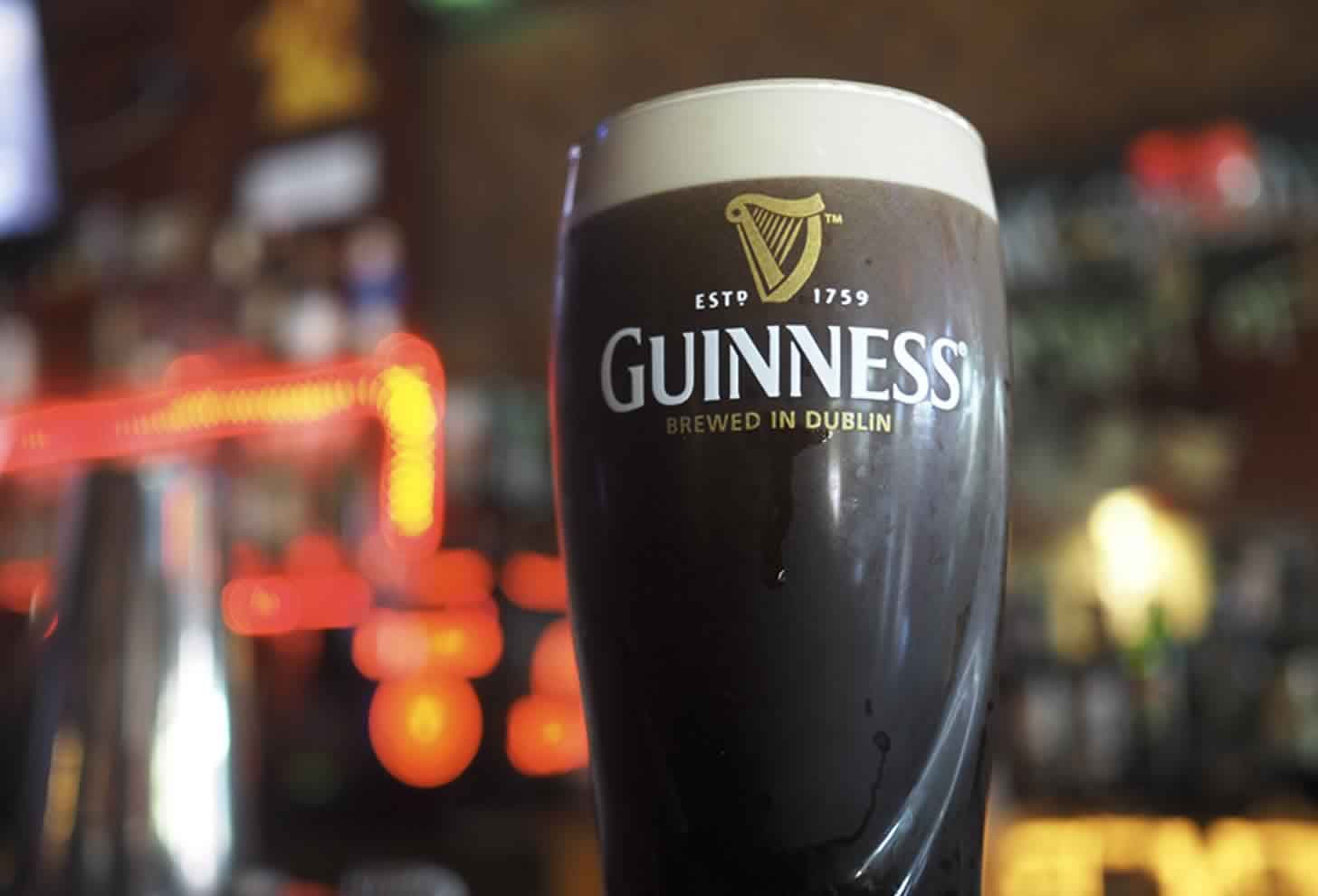
The legendary Irish product has been produced in Dublin for more than two and a half centuries. In addition to the main brewery in the capital, whose history dates back to 1759, the company has breweries and representative offices in other countries, including Russia.
Guinness beer is surrounded by a huge number of legends and myths: probably no other Irish drink can boast such a rich supply of secrets and sensations.
The company is also credited with several original inventions and innovative projects.
The history of Guinness beer
The famous brewer and philanthropist Arthur Guinness is at the origins of one of the most popular alcohol brands in Ireland. He is known not only as the founder of the Arthur Guinness Son company & Co.", but also as a father of many children.
The family of the Irish brewer had 21 children. Unfortunately, many children died in infancy: only 10 of them survived to adulthood. It is noteworthy that Guinness's three sons decided to continue their father's business and also connected their lives with the brewing business.
Arthur himself has been interested in making the foamy drink since school days. Together with his father, they brewed ale for the local Archbishop Price, who was the boy's godfather. After the death of the clergyman in 1752, Arthur inherited 100 pounds.
The amount was enough to open his own brewery in Lakeslip. However, the ambitious Irishman did not stop there. A few years later, he moved to the capital, where he rented an old brewery near St. James's Gate, thus marking the beginning of a great success.
Exactly 10 years later, a batch of Guinness ale went on a voyage to the shores of England, and in the 70s the first branded porter, now known as the national British drink, was brewed. It was a fundamentally new product for Ireland. Subsequently, the "black beer" became the prototype of the Guinness Foreign Extra Stout, which was exported and made its creator famous all over the world.
The new alcohol was so popular with local beer drinkers that by the end of the 18th century, Guinness abandoned the production of ale and focused on improving porter.
It is noteworthy that the latter has long been known as a "drink for hard laborers" and was consumed in large quantities by porters to recuperate. Half a century later, the product was actively prescribed to recovering patients, pregnant women and breastfeeding mothers due to its high iron content.
After the death of Arthur Guinness in 1803, the company's management passed into the hands of his sons. For a long time, the company retained a family character: the post of the head of the company until the 80s of the 20th century was held exclusively by representatives of the famous family name.
The 19th century was the most active for the company in terms of expanding production capacity and increasing exports. Deliveries to America, Africa, Europe, and New Zealand were established. In 1998, the Guinness brand was acquired by Diageo, a premium beverage company.

Secrets of Guinness brewing
For a long time, a method of mixing freshly brewed and settled beer was used to create Guinness Porter, which provided the drink with a light milky tint and a stable foam. Later, this method was abandoned, and to form a lush head, they began to enrich the product with nitrogen and carbon dioxide.
Luxurious foam is one of the distinctive features of the legendary stout. The creators of Irish beer pay special attention to selected ingredients and adherence to technology:
Malt barley is purchased from trusted farmers with whom the company has been working for several decades. Water is obtained from the local Pulafuka Lake, located in Wicklow County.
To give the stout its characteristic reddish color, rich flavor and specific burnt aroma, barley roasted to blackness is included in the composition. Heat treatment time and temperature (232 °C) are strictly controlled.
The amount of hops contained in Guinness beer is 2 times higher than in similar products of other brands. Thus, the manufacturer enhances the taste of drinks.
Special yeast, bred by the first generations of brewers, completes the list of ingredients. The valuable strain is carefully stored in the company's laboratories. To create stouts, they use the technology of top fermentation.
The maturation process, which is necessary to obtain a balanced taste and thick consistency, is monitored by leading experts. To assess the quality of the finished drink, a special test for "head height" or "number of bubbles" is used. There should be about 3 million of them.
Today, Guinness beer is produced all over the world. Regardless of the country of production, the high standards set by the drink's homeland, the Dublin brewery St. James's Gate, are followed during the manufacturing process.
Types of Guinness beer
Draught
One of the brand's iconic products is a dark draft beer with a velvety texture and creamy foam head. Initially produced exclusively in kegs, but after the invention of the widget, it is also available in bottles and cans. Aroma: coffee with tones of malt. Nose: bittersweet with hints of roasted barley. Aftertaste: smooth, creamy, balanced. Strength: 4,2%.
Hop House 13 Lager
Golden amber beer with a dense foam containing a double dose of Australian and American hops. Aroma: light, with floral and citrus notes. Aftertaste: bright, lively, refreshing, with hops tones. Alcohol content: 5%.
Foreign Extra Stout
A famous drink created for export, able to withstand long sea voyages. It is based on the West India Porter recipe developed in the early 19th century. Aroma: powerful, with pronounced notes of burnt grain. Taste: rich, full-bodied, bittersweet, with fruity accents and bright character. Strength: 7,5%.
Dublin Porter
Another drink made according to old recipes with minor improvements. Date of creation: 1796. Color: ruby red, less intense than stout. Aroma: delicate, with notes of hops and toffee. Taste: malt and caramel, without pronounced roasted tones. Aftertaste: smooth, light, sweetish. Strength: 3,8%.
West Indies Porter
The very first ruby red porter that set sail to the shores of foreign countries in 1801. The modern version uses American hops. Aroma: toffee, caramel, light chocolate notes. Taste: sweet, with hints of cocoa beans and coffee. Aftertaste: smooth, light, mild. Alcohol content: 6%.
Nitro IPA
One of the company's latest developments in the Indian Pale Ale category. Color: golden honey. Aroma: a combination of spicy citrus zest with delicate pine notes. Taste: a balanced mix of hops and roasted barley with fruity accents. Aftertaste: smooth, creamy, rich, with a pleasant bitter hop aftertaste. Strength: 5,8%.
In addition to the listed drinks, the following are produced under the well-known brand: "Guinness Original", "Guinness Golden Ale", "Guinness Blonde American lager", "Guinness Smooth", "Guinness Special Export", "Guinness Black Lager".
How to drink Guinness beer
A whole ritual was invented for tasting Guinness stouts with two pours and the use of a special tulip-shaped pint-sized glass. It must have the brand logo on it.
First, the vessel must be tilted at a 45° angle, then filled ¾ full, wait until foam forms, and then add the rest under high pressure using a special separator. The entire operation must be carried out in a certain period of time - just under 120 seconds.
Later, a new "accelerated" pouring system was invented - a 25-second pouring system. Before sampling the beer, you should wait until the light foamy head is clearly separated from the dark drink. Drink stout in several large gulps.
Of course, these methods are not particularly popular at home.
For individual tasting, it is enough to cool the drink to 6-10 °C. Draft beer is usually paired with meat (smoked, baked, grilled), Latin American and German dishes, cheese and fruit pastries. Stouts are good with spicy chicken, French fries, chocolate desserts.

Interesting facts
Why there is a plastic ball in the Guinness can? The round design is nothing more than a special beer widget developed by the company's employees in 1988 to preserve the bright taste of the drink and create a lush foamy cap. It was invented specifically for tin cans. For this innovation, the company was awarded the Royal Award of Great Britain.
The contract signed by Arthur Guinness in 1759 with the owner of the old Dublin brewery specified a phenomenal lease term of 9000 years.
In the winter of 1861, the whole of Britain was plunged into mourning on the occasion of the death of Saxon Prince Albert. An employee of one of the London bars decided to emphasize the gloomy mood prevailing in the city and, when serving champagne, added dark "Guinness Extra Stout" to it. This is how the two-layer Black Velvet cocktail was born. By the way, it is far from the only one with the legendary beer in its recipe.
The Guinness family name gave the world not only Irish stout, but also the famous Guinness Book of Records. The first copy was published in 1955.
In the 1870s, a circular narrow-gauge tramway was built around the plant to supply raw materials to the growing brewery.
The advertising campaigns launched by the company in the 20s and 30s of the XIX century actively featured exotic fauna: toucan, crocodile, ostrich, sea lion. Even animals recognized that Guinness beer is worthy of attention. The most popular slogan was "Guinness is Good For You". The company was particularly successful with advertisements featuring the "Man in Black" or "John Priest" played by Rutger Gauer.
During the celebration of the 200th anniversary of the company, 150 thousand bottles of Guinness with colorful certificates "from the Neptune office" and gold labels were dropped into the Atlantic Ocean from different ships.
During a massive fire at the company in 2009, beer production did not stop for a minute.
The bottles of stout produced in Ireland still bear the signature of the founder, which, together with the harp and the word "Guinness," constitutes the company's trademark. In addition to beer, the company's symbols are actively used to decorate Irish souvenirs: mugs, household appliances, clothing, etc. You can buy them in almost any store in the country. Dublin also has the Guinness Museum, which is visited by thousands of foreigners every year.
Update: 15.03.2019
Category: Beer, Cider, Ale