Bavaria beer: history, flavors, interesting facts
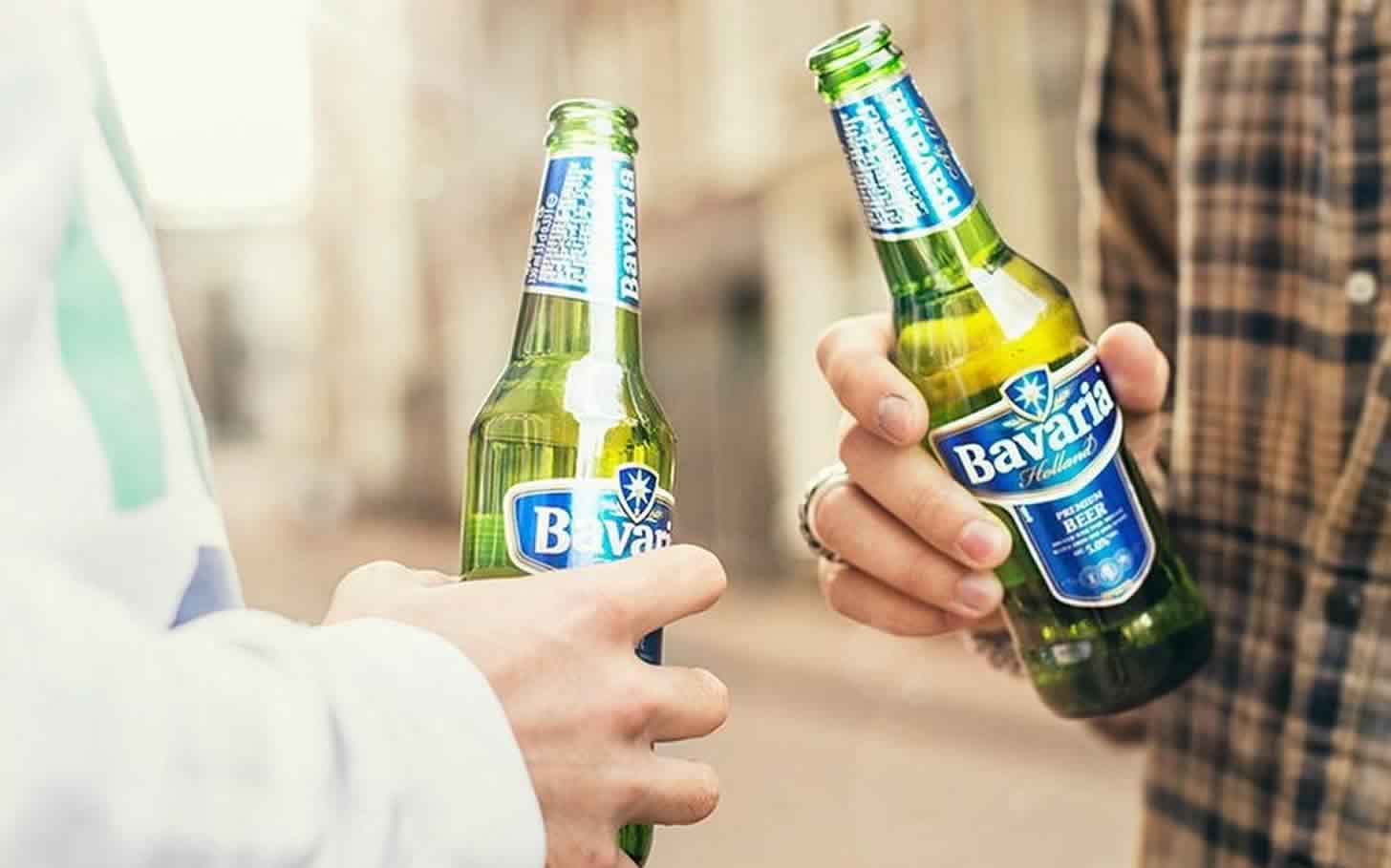
The brand of foamy alcohol, which is well known to the Russian consumer, was created not in Germany, as one might assume, but in the Netherlands.
The first bottle of Bavaria beer was produced in the south of the country, in North Brabant in 1924. What dictated the choice of the German name for the Dutch beer brand is a mystery that has been puzzling several generations of drinkers for years. There are various assumptions, but no one knows the exact answer to this question.
History of Bavaria beer
The story of one of the largest breweries in Ukraine, which produces more than 5 million hectoliters of alcohol per year, began with a tiny enterprise in the village of Lishaut. The first mention of the brewery on Kerckdijk Street dates back to 1680, although the company's founding is generally considered to be 1719, when it became a family business.
Initially, the company belonged to a large farmer Dirk Verheijken, who also held the position of village head. The small brewery served only the local population and a few visitors who stayed in the village and its surroundings.
Perhaps the company would have remained little known if not for a fortunate coincidence. In 1764, the great-great-granddaughter of the first owner of the Kirkdijk brewery married Ambrosius Swinkels, a wealthy local farmer whose descendants not only turned the family business into a profitable venture but also made their own name famous around the world.
The year 1924 is generally considered to be a turning point for the company, when brothers Jan, Pete and Frans Swinkels built a new brewery and tested the revolutionary "Pilsner" brewing technology, which allows to produce lighter and clearer foamy alcohol using bottom fermentation.
The products were named "Bavaria" and began to be bottled. The experiment proved to be successful: the drink took root among Dutch beer lovers and soon began to be shipped to other countries. The level of exports reached a serious scale in the 1970s, and then only increased.
It is interesting that during the 300 years of its existence, the company has never changed hands and has always remained a family business: today the company is headed by the seventh generation of the Swinkels family. A significant part of the products is still produced in Lisgaut. Bavaria also has its own facilities in Russia, where the company is represented by the Efes Beer Group, a brewery in South Africa, and production lines for soft drinks.
Specifics of Bavarian beer production
The main thing that distinguishes Bavaria from its major competitors is the preservation of the old family recipe, absolute naturalness and consistently high quality of drinks. Other characteristic features of a Dutch company are:
Implementation of energy-saving and environmental technologies in brewing. Carbon dioxide produced during the maturation of beer is used to carbonate soft drinks. The remaining water that is not needed in the process is purified and poured into the river. Excess heat is redistributed from one production area to another.
Self-preparation of the main ingredients. The company obtains clean spring water from its own source, malt is produced at its own malt house, and grain is purchased from trusted local farmers.
Using copper to make pipelines. The material has excellent thermal conductivity and is ideal for brewing. The company considers significant expenditures on expensive metal to be a necessary contribution to maintaining the image of a high-end producer.
Flavors of Bavarian beer
The company's most famous beer is the classic light Bavaria Premium. The drink has a pale golden color and a mild refreshing flavor with subtle hop notes. It has lightness, and a tonic effect. Strength - 5 %. It is sold in tin cans and glass bottles of various volumes (from 0.25 to 0.66 liters).

In Russia, a low-calorie, non-alcoholic version of the malt beverage "Bavaria Malt" is also popular.
Unlike similar products of other brands, this type of beer really has zero strength, i.e. it has zero.е. absolutely alcohol-free. The product is characterized by a rich sweet and fruity flavor with a subtle bitterness.
The drink is produced from selected barley malt without any artificial ingredients. Many tasters say that it is the "most delicious non-alcoholic beer" in the world. It has been produced since 1978.
Less popular is the strong "Bavaria 8".6 Gold" (alcohol content - 6.8%), which is characterized by a sharp taste with pronounced sweetness. The drink is not in special demand and belongs to the category of "for amateurs".
It is noteworthy that Russian Bavaria is produced from the same ingredients and using the same technologies as Dutch. The only difference is the use of local water.
The company also produces special limited versions of Bavaria for anniversaries, fruit versions of the drink, beer under the brands La Trappe, Claro, Lander Brau, Hollandia, Dutch Windmill, etc.
Interesting facts
The popularity of the premium brand is promoted by original advertising campaigns and participation in sponsorship of major sporting events. Among the most memorable is the Blue Monday campaign, during which employees of the company took to the streets of Lisgaut and exchanged any drinks for Bavarian products for free.
The company was the first to seriously think about creating non-alcoholic beer. The product was developed and put into production in the 70s, focusing on potential Muslim consumers, and in the 90s the drink gained mass recognition. An important role in the growth of popularity was played by advertising with the participation of American soldiers fighting in the Persian Gulf and happily consuming "zero".
According to local legends, among the fans of Dutch beer was the famous artist Van Gogh, who, after tasting a drink from Lisgaut, did not speak very favorably of German alcohol.
In 2007, the European Commission fined the brewing giants Heineken, Bavaria and Grolsch for a criminal conspiracy to set inflated prices for foamy alcohol in the Netherlands.
Update: 11.03.2019
Category: Beer, Cider, Ale