Wine: what is fermentation and why does it happen?
Preface
People have long noticed that any berry, grape or other juice squeezed from fruit and left in a vessel, no matter how tightly sealed, soon begins to boil, cloud, foam, and, if the vessel is tightly sealed, even breaks it and eventually turns into a heady drink - wine, which contains a sugary substance - liquid. This change of juice into wine is called fermentation.
For a long time, we did not know why it happens. It was only in the 60s of the XIX century that French scientist Louis Pasteur studied this issue and found that the fermentation of any sweet, t. е. liquid containing sugary substances comes from the fact that special lower organisms, which have been called yeast or yeast fungi, settle, multiply and live in it.
About yeast fungi
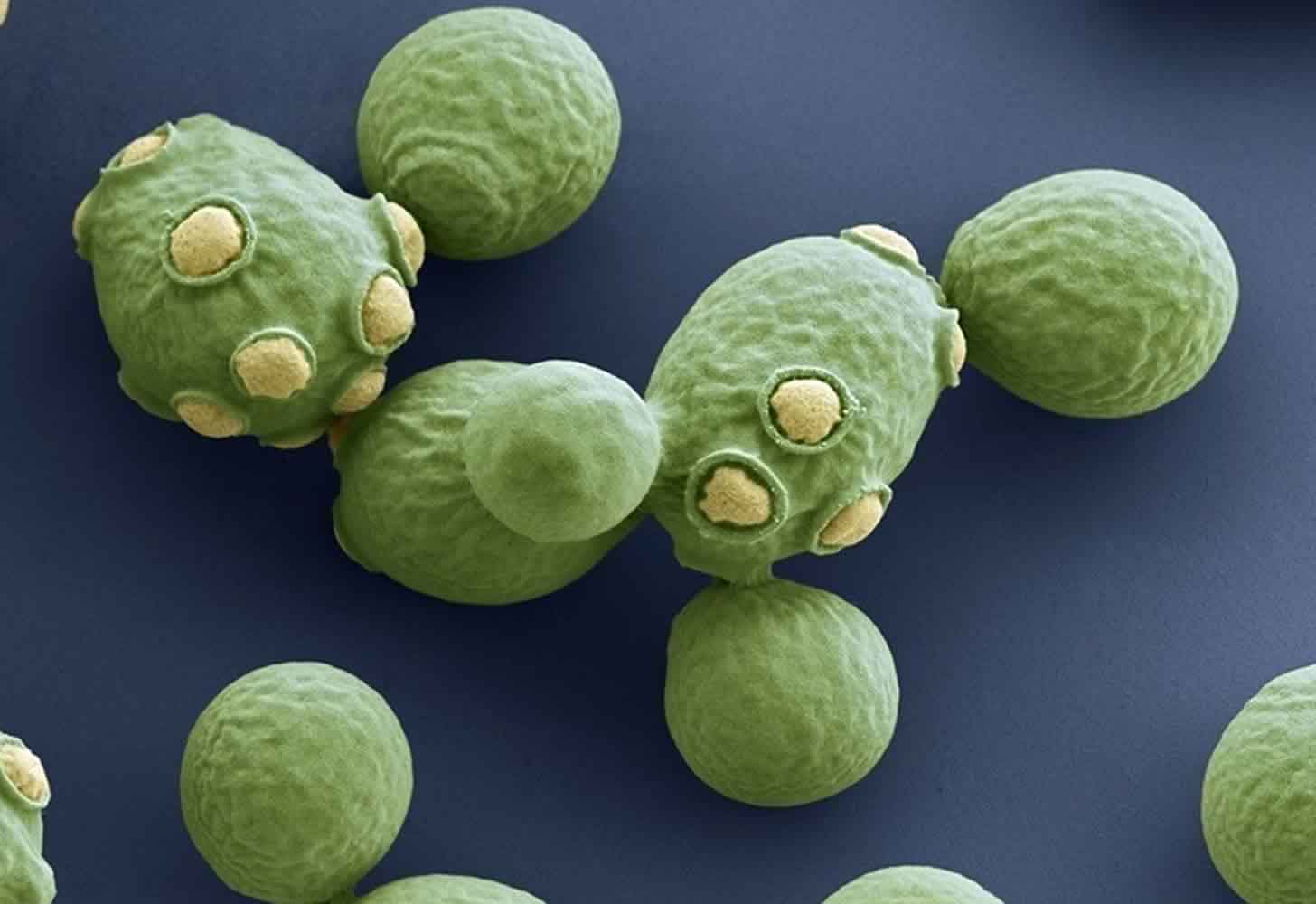
Yeast fungi are rounded or elongated bodies and are so small that they can only be seen through a microscope. Collected together in huge quantities of individual fungi, yeast is the grayish-yellow mass that settles at the bottom of a bottle when fruit juice is allowed to stand for some time.
Yeast fungi have the ability to multiply very quickly under favorable conditions, so in factories that prepare yeast, tens or hundreds of pounds of pressed yeast are produced from one such fungus within 1-2 days... If such a body gets into fruit juice that has at least a little sugar, it begins to multiply immediately and causes the juice to ferment. Due to the fact that these fungi are extremely small and do not lose their viability during drying, and becoming very light, are carried everywhere in the air, there is no way that at least one such fungus does not get into the juice that has been exposed to the air for at least a few minutes... These fungi can only be killed by boiling the juice, and in a tightly sealed container.
Once in the sugary juice, yeast fungi begin to multiply very quickly if the conditions are favorable. These fungi reproduce in three ways: by budding, spores, and less commonly by division. During budding, a wart appears on the side of the yeast body - a bud; this bud grows rapidly, reaches the mother's size and then, and sometimes sooner or later, separates from the mother body and lives as an independent fungus. Often, this daughter bud, not yet separated from the mother, forms its own buds, and those, in turn, form their own buds, and thus grandchildren, great-grandchildren, and so on, so in these cases, a kind of highly branched tree is formed, consisting of round bodies connected to each other - buds. This group of fungi is called a yeast colony. At the slightest shock, this colony quickly breaks down into individual bodies - yeast fungi. This reproduction by budding is extremely fast.
Types of yeast reproduction
Yeast reproduction by spores is slower. When the fungus reaches full maturity, which usually happens in 10-12 hours of its life, then 1-11 rounded bodies called spores are formed inside the body of the yeast fungus, which, having reached the appropriate size, break the mother body and thus are released... If the conditions are favorable, then these spores begin to grow, multiply by budding, and form colonies, like adult fungi.
This method of reproduction is usually noticed when yeast fungi, without sufficient food, are in danger of starvation. Yeast spores are important for us because in the form of spores, these fungi can more easily tolerate unfavorable living conditions, dryness, hunger, more or less intense heat, etc. In addition, since they are smaller than yeast fungi, they are more easily transported by air.
Reproduction by division is relatively rare and only in some species of yeast fungi that have an elongated rod-shaped form. In this case, a partition is formed in the middle of the fungal body, which divides the fungus into two independent fungi, which grow rapidly and, in turn, divide in half, etc. д. д. The result is a colony of yeast fungi in the form of a more or less long chain.
The main, most important conditions necessary for the reproduction and life of yeast fungi are:
Sufficient food for building the body of yeast fungi.
Sufficient heat.
The ability to extract in one way or another the oxygen required for the work of these fungi.
The food of yeast fungi is mainly protein (nitrogenous) substances, minerals and only in the lowest amount sugars.
Protein substances (nitrogenous), being absorbed by the bodies of yeast fungi, accumulate inside them, burst them and thus cause yeast growth and bud formation. Due to a lack of protein substances, yeast does not multiply and temporarily dies.
The most important minerals are phosphoric acid, potassium, less magnesium and even less lime. Sugar is required for yeast food to a very low degree, and, in case of its lack, yeast can easily do without sugar.
Conditions for obtaining high-quality yeast
Yeast fungi need enough heat to live. Although these fungi can withstand very low temperatures and do not die even when frozen, but only freeze, they do best at more moderate temperatures. Yeast reproduction by budding requires 4° - 20 hours, 13.5° - 10 1/2 hours., 23° - 6 1/2 ч. and at 28°C for 5 3/4 hours. It is believed that the life of yeast fungi occurs only at a temperature not lower than 1° and not higher than 47°. At lower temperatures, fungi freeze; and at higher temperatures (when heated to 80-100°C), they even die. Yeast fungi, like all animals and humans, obtain the heat necessary for life through respiration.
What is yeast respiration
Yeast fungi need warmth for their life, and they get this warmth by burning carbohydrates (sugar, etc.). п. The fungi are formed by the combustion of carbohydrates (substances), which generates heat. But unlike more advanced organisms, such as humans and animals, yeast fungi do not burn these carbohydrates completely, but interrupt the combustion in the middle, being satisfied with this incomplete combustion for their life. At the same time, yeast fungi convert this carbohydrate, sugar, into alcohol and carbon dioxide.
Various fungi, bacteria and other microorganisms pick up the unfinished work of alcoholic fermentation yeast and continue it. These are, for example, bacteria and fungi of vinegar fermentation, which burn (again, partially) the alcohol produced and convert it into acetic acid, releasing some heat calories and thus continuing the process of respiration (sugar burning) further. There are organisms that further decompose acetic acid, etc. д. until eventually everything is converted into carbon dioxide and water, i.e. е. until the sugar burning process is completed.
Other yeast fungi, bacteria, and other lower organisms, burning sugar, turn it into lactic and butyric acids, but even here the burning is not complete, and it continues, in turn, by other new organisms. At the same time, some of the yeast fungi of the group that continues the work of alcoholic yeast cannot live without air, and they need oxygen. As we will see, this is an extremely important circumstance, very useful for the winemaker.
The importance of sugar burning in yeast fungi
It was noticed that each yeast body contains a liquid called yeast juice. This juice contains special substances that were once called enzymes and are now called enzymes. These enzymes, acting on sugar and other carbohydrates and producing the partial burning of them mentioned above, release heat necessary for the life of yeast and those substances that we want.
Many types of such enzymes have already been studied, because each type of fungi, bacteria, and other organisms has its own enzyme. Yes, the yeast fungi that cause alcoholic fermentation contain an enzyme called alcoholase in the juice, which acts on the sugar in the fruit juice to convert it into alcohol and carbon dioxide. This conversion of sugar into alcohol is called alcoholic fermentation.
In addition to alcoholic fermentation, fruit juice can also undergo other fermentations. So, if bacteria and fungi that convert sugar into acetic acid get into the juice, then acetic acid fermentation occurs. This fermentation is important in the production of vinegar.
Lactic acid fermentation, which produces lactic acid, is necessary for fermenting fodder, cabbage, for souring, etc. Malolactic acid fermentation, which produces butyric acid, causes cow's oil to become rancid, etc.
The final thesis from Vzboltai
For winemaking, the most important is alcoholic fermentation, and for winemaking, the most important is alcoholic fermentation. All other types of fermentation in winemaking are absolutely undesirable, as they cause diseases and spoilage of wine.
Update: 22.08.2021
Category: Wine and Vermouth