How champagne is made in France, Italy and Russia
Champagne is a favorite drink of many. All holidays and important events are associated with this sparkling wine. It is drunk at home dinners and royal receptions. Like everything else in our world, champagne has a long history behind it, and here's where it comes from.
How champagne was created
Champagne - one of the few regions that belonged to the royal crown during the feudal times.
The region is located in the very north of France, summers were cold, winters were harsh - however, this did not prevent viticulture here.
The business was not as successful as in warmer regions of the country - during frosts, grapes were poured with water so that they would not suffer from frost, and in cold spring and summer they were heated with the help of special ovens, grown in warm rooms. Н
Despite this, Champagne wines were popular, especially at the imperial court.
Over time, the wine drinks produced here began to lose their ability to compete with other wines, and then champagne came to the rescue.
The recipe for the champagne that we can buy now in the store was developed and perfected in the II century. Champagne made a huge splash among the aristocracy of France, England and, of course, the Russian Empire.
Currently, champagne is produced in two stages: first, the preparation of the wine base, and then the so-called champagnization - the process of turning ordinary wine into sparkling wine.
The wine base for champagne is made in four stages: first, juice is squeezed from the grapes, then it is sent for primary fermentation.
After that, sugar and yeast are added to the resulting liquid - producers of ethyl alcohol. Such a base is called a circulating liquor.
Champagnization in each country has its own production technique.
Champagne production in France
The homeland of champagne still uses the traditional method - on the labels of French wine you can easily find the inscription "méthode classique" - the classic method, also called champagne.
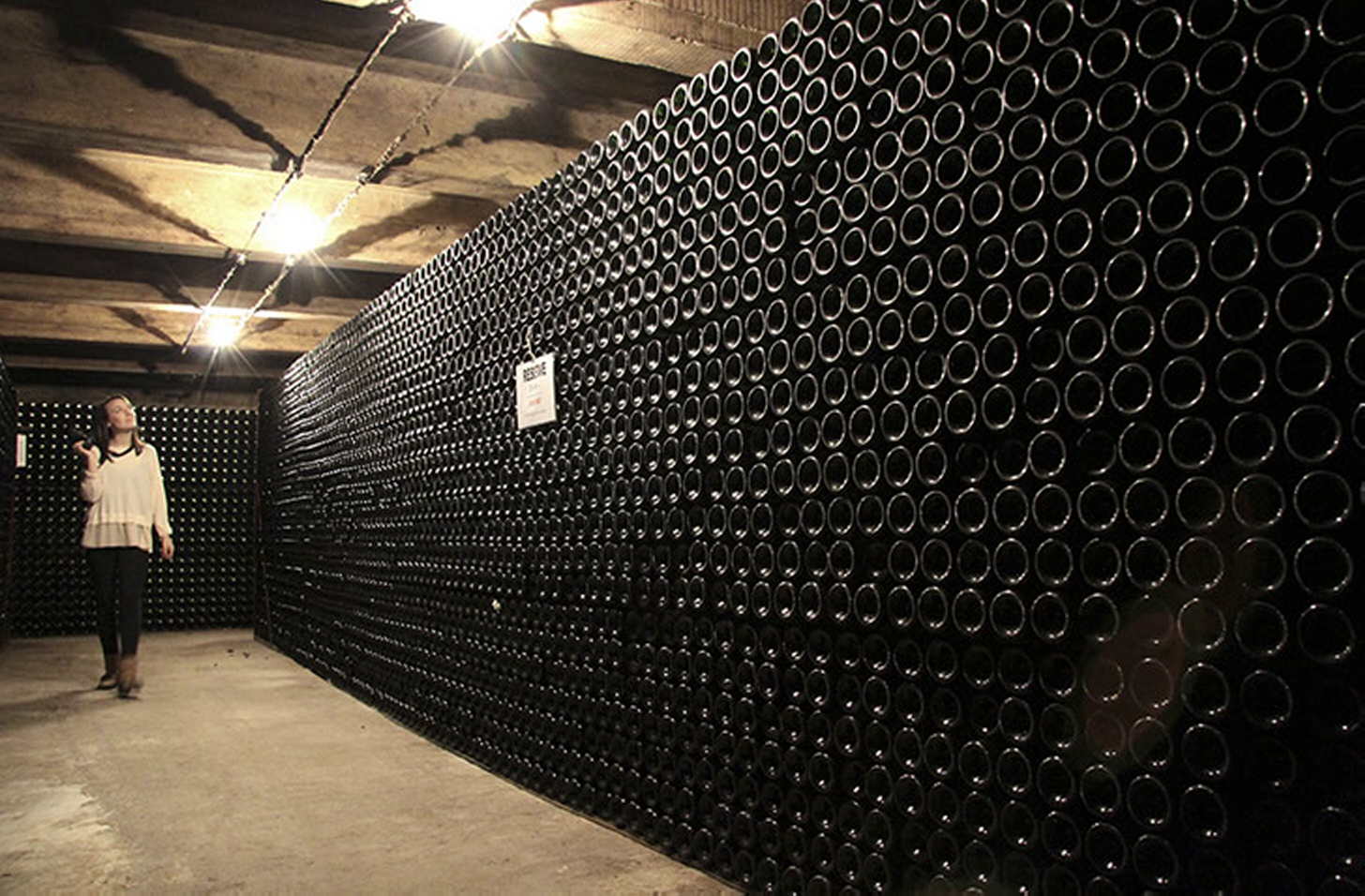
The wine obtained after fermentation is bottled, corked and aged for at least 9 months, in Champagne - at least 12 months.
During aging, sediment appears in the bottles, the bottles are in a horizontal position.
Then, the bottles are remuaged and degorged - gradually turning them upright with the cork down and removing the sediment, respectively.
Wine and sugar are added to the drink, which has been cleared of sediment.
The resulting sparkling wine is bottled and sent for aging. Next - sale and export.
The manufacturer is jealous of the name of his drink, and only wines produced in the Champagne region of France can bear the proud name of champagne. All other wines are sparkling wines.
For example, in Italy, champagne is called cava or asti, and in other wine regions of France - crémant.
The secret of Italian champagne
In Italy, wine is most often produced by the Sharma method, or the transfer method, which is somewhat simpler in structure than the classic method of producing champagne.
The wine base is immersed in a tank where secondary fermentation takes place, the tank is closed at this time.
After the appearance of sediment (maturation of champagne), a duct is opened from the bottom of the tank, through which the sediment is removed.
Dozage - adding wine and sugar to a purified drink.
Bottling, maturation before sale.
Italian wines have a unique taste and high quality, although their production technique is much simpler than the original one.

Soviet champagne is a Russian sparkling wine
In Russia, champagne is produced by the tank or continuous method. This technique is also simplified compared to the original one: the wine is produced in large interconnected tanks, where all stages of production take place - from fermentation to bottling.
For secondary fermentation, the wine base is immersed in a pressure tank.
From the tank with the wine base, which has undergone secondary fermentation, the wine is sent to the first tank with sugar and yeast.
Fermented wine, aged for time, goes to the second and third tanks, where it settles.
The purified wine is matured in the fourth and fifth tanks and then bottled.
The production of Soviet champagne looks like a conveyor belt - fermentation never stops, the tanks are constantly filled - so Soviet champagne has its own "special taste" and is significantly different from all other foreign-made sparkling wines.
Finally, a little advice on how to open any champagne correctly to preserve its unique flavor and aroma. The bottle should be held at a 45-degree angle; if you open it vertically, a sharp pressure drop can break the cork and the wine will foam. When opening the cork, there is no need to twist and swing it - just twist the bottle while holding the cork.
Update: 18.07.2018
Category: Wine and Vermouth